Peabody, MA 01960Licensed Insured Team24/7 Emergency Line

7 Signs You Need Sewer Line Repair (Not Just a Plumber Visit)

By Sewer Line Repair Company · Updated September 30, 2026 · Peabody, MA

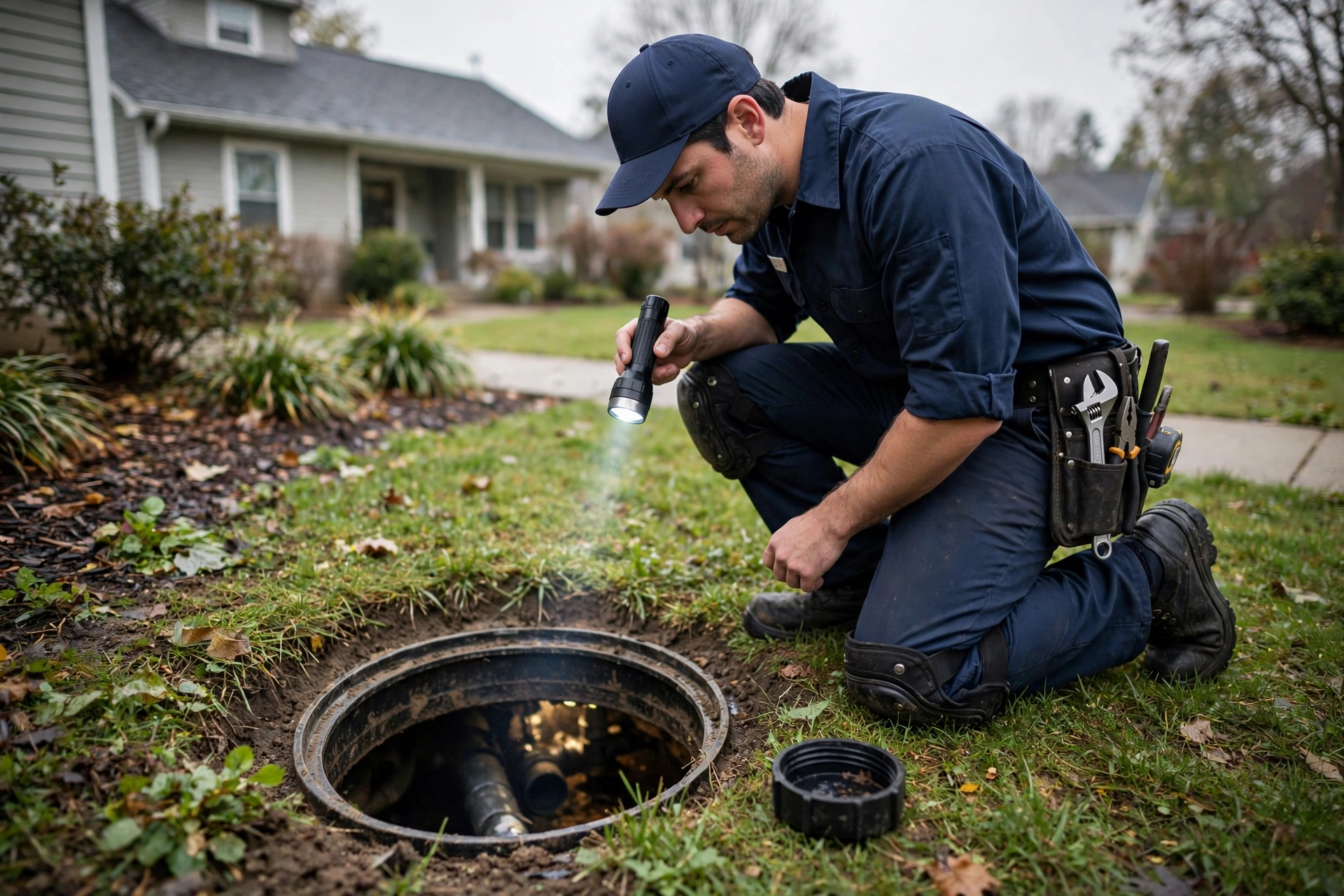
Plumber inspecting a sewer cleanout

Your Sewer Line Talks — Here's How to Listen

Most sewer line failures announce themselves weeks or months in advance. The trouble is, homeowners misread the signs as minor plumbing quirks — until sewage is backing into the basement. Here are the seven warning signs that point to the main sewer line, not a simple clogged drain.

1. Multiple fixtures draining slowly at once

One slow sink is a local clog. Sinks, tubs, and toilets all sluggish together means the restriction is in the main line they share.

2. Gurgling sounds from drains or toilets

That glug-glug when the washing machine drains is air trapped by a partial blockage — often a root mat or a belly holding water.

3. Sewage odors indoors or in the yard

A healthy sewer line is airtight. Persistent rotten-egg or sewage smells mean gas is escaping through a crack, a failed joint, or a dry/broken vent connection.

4. Water backing up in odd places

Flush the upstairs toilet and water rises in the basement shower? That cross-connection backup is a textbook main-line symptom.

5. Soggy or sunken patches in the yard

Wastewater leaking from a cracked pipe saturates the soil above it. A strip of suspiciously lush grass tracing a line across the lawn is the same signal.

6. Frequent clogs that keep returning

If you have called for drain cleaning twice in a year, the pipe — not the debris — is the problem. Cleaning a broken pipe is renting relief, not buying a fix.

7. An older home with original pipe

Clay tile and cast-iron lines from before 1980 are living on borrowed time. If you do not know your pipe's condition, a camera inspection is the cheapest certainty you can buy.

What to Do Next

Two or more of these signs? Start with a camera inspection ($150–$400). It shows exactly what is wrong and what it will take to fix — so you act on evidence, not anxiety. Call (833) 713-2101 for same-day scheduling in the Peabody area.

Need help with your sewer line?

Call (833) 713-2101 for same-day service across Peabody and the North Shore — camera inspection, upfront pricing, guaranteed work. Get Free Estimate

Related Services

← Back to Sewer Line Repair Company homepage · Service areas

Keep Reading

Trenchless vs. Traditional Sewer Repair

Digging up the yard is not your only option anymore. We compare trenchless methods with traditional excavation on cost, time, and disruption.

Read More →

What Causes Sewer Line Damage

Roots, age, ground shifts, and grease — the usual suspects behind sewer line failures in Massachusetts homes, and how each one damages your pipe.

Read More →

Sewer Line Repair Cost Guide

Realistic price ranges for every common sewer repair — and the factors that move your quote up or down.

Read More →

Questions? Talk to a Sewer Specialist

Call (833) 713-2101 — real answers, no pressure.

Call (833) 713-2101
📞 (833) 713-2101

CIPP Pipe Lining: How Cured-in-Place Pipe Rehabilitation Works

CIPP Pipe Lining: How Cured-in-Place Pipe Rehabilitation Works

Cured-in-place pipe (CIPP) lining rehabilitates your sewer lateral from the inside. No digging, no pipe removal — just a new pipe formed within the old one.

What CIPP Lining Is

CIPP is a trenchless rehabilitation method. A flexible felt or fiberglass tube saturated with epoxy resin is inserted into the damaged pipe — usually by inversion (turned inside-out with air or water pressure) or by pulling it into place. Once positioned, the resin is cured with hot water, steam, or UV light, hardening into a rigid, jointless new pipe bonded to the inside of the old one.

The Step-by-Step Process

1. Cleaning: The line is hydro-jetted spotless. Liner adhesion depends on a clean host pipe, so this step is non-negotiable. 2. Measurement: The lateral is measured precisely — liner length and diameter must match. 3. Resin saturation: The liner is impregnated with two-part epoxy, carefully metered for even coverage. 4. Installation: The liner is inverted or pulled into the pipe and positioned over the damaged section. 5. Curing: Heat or UV hardens the resin, typically in 2–4 hours. 6. Inspection: A post-cure camera run verifies a smooth, continuous new pipe.

What Problems Lining Fixes

  • Cracks and fractures in otherwise aligned pipe
  • Root intrusion at joints (the liner seals every joint)
  • Corrosion and scale in cast iron lines
  • Minor offsets where pipe sections have shifted slightly
  • Infiltration — groundwater leaking into the line through cracks

What Lining Cannot Fix

Lining follows the existing pipe's shape, so it cannot correct bellies (sagging sections that hold water) or severe collapses where the liner cannot pass. It also slightly reduces internal diameter — usually negligible in a 4-inch lateral, but worth noting. Pipes that have lost their grade or are fully collapsed need bursting or open-cut instead.

How Long Does a Liner Last?

Properly installed CIPP liners are engineered for a 50-year service life. The epoxy is chemically resistant and the jointless result eliminates root entry points. In Peabody, MA, where clay and rocky fill and coastal New England winters punish rigid joints, a flexible liner that moves slightly with the ground is a genuine advantage.

Common Mistakes Homeowners Make

The biggest mistake is ignoring early warning signs. A slow drain that clears with plunging feels resolved, but if the underlying cause is root intrusion or a developing belly, the problem returns worse each time. Another frequent error is hiring based on price alone — the cheapest quote often skips the camera inspection, meaning the contractor is guessing at the problem. In Peabody, where clay and rocky fill and coastal New England winters create specific failure patterns, local experience matters more than a low bid.

Homeowners also err by flushing so-called "flushable" wipes, pouring grease down kitchen drains, or planting thirsty trees directly over the lateral path. Each of these shortens the line's life measurably. A little prevention — knowing where your lateral runs, keeping wipes out, and scheduling periodic inspections — avoids most emergencies.

Frequently Asked Questions

How do I know if my Peabody home needs this service?

Watch for the classic indicators: recurring slow drains, gurgling sounds, sewage odors, or unusually lush patches in the yard. If your home has dense older neighborhoods plus newer builds, a camera inspection is the definitive way to assess the lateral's condition rather than guessing.

Can I handle this as a DIY project?

Minor maintenance like keeping drains clear of grease is fine for homeowners. But anything involving the main lateral — inspection, cleaning with professional equipment, or repair — requires licensed professionals with specialized tools. Mistakes on a sewer lateral can create health hazards and expensive damage.

How long does the work typically take?

Most diagnostic visits and cleanings complete in a few hours. Trenchless repairs usually finish in one to two days. Full replacements depend on length and method but rarely exceed a week for residential properties in Peabody.

Will my yard be torn up?

Not necessarily. Trenchless methods were developed specifically to avoid excavation. Even when some digging is needed, professional crews restore the surface afterward. Ask your contractor exactly what restoration is included before work begins.

How do I choose the right contractor in Peabody?

Verify licensing and insurance, read local reviews, and insist on a camera inspection before accepting a repair quote. A reputable contractor explains your options — including doing nothing yet, if the line is sound — rather than pressuring an immediate decision. Call (833) 713-2101 for an honest evaluation.

Is Lining Right for Your Line?

The answer always starts with a camera inspection. If your pipe is cracked but holding its shape and grade, lining is often the fastest, least disruptive fix — most jobs complete in a single day with no excavation. Call (833) 713-2101 to have your Peabody lateral evaluated for CIPP candidacy.

Bottom Line

Understanding this aspect of your sewer system puts you in control. In Peabody, where clay and rocky fill and coastal New England winters create specific challenges for dense older neighborhoods plus newer builds, informed homeowners make better decisions and avoid overpaying. Keep this guide bookmarked, share it with neighbors facing similar issues, and do not hesitate to get a professional opinion when something seems off. For expert help in Peabody, call (833) 713-2101.

Need help with your sewer line in Peabody? Our team provides honest diagnostics and lasting repairs. Call (833) 713-2101 today.

YPE html> CIPP Pipe Lining: How Cured-in-Place Pipe Rehabilitation Works | Peabody Sewer Experts
Peabody, MA 01960Licensed Insured Team24/7 Emergency Line

7 Signs You Need Sewer Line Repair (Not Just a Plumber Visit)

By Sewer Line Repair Company · Updated September 30, 2026 · Peabody, MA

Plumber inspecting a sewer cleanout

Your Sewer Line Talks — Here's How to Listen

Most sewer line failures announce themselves weeks or months in advance. The trouble is, homeowners misread the signs as minor plumbing quirks — until sewage is backing into the basement. Here are the seven warning signs that point to the main sewer line, not a simple clogged drain.

1. Multiple fixtures draining slowly at once

One slow sink is a local clog. Sinks, tubs, and toilets all sluggish together means the restriction is in the main line they share.

2. Gurgling sounds from drains or toilets

That glug-glug when the washing machine drains is air trapped by a partial blockage — often a root mat or a belly holding water.

3. Sewage odors indoors or in the yard

A healthy sewer line is airtight. Persistent rotten-egg or sewage smells mean gas is escaping through a crack, a failed joint, or a dry/broken vent connection.

4. Water backing up in odd places

Flush the upstairs toilet and water rises in the basement shower? That cross-connection backup is a textbook main-line symptom.

5. Soggy or sunken patches in the yard

Wastewater leaking from a cracked pipe saturates the soil above it. A strip of suspiciously lush grass tracing a line across the lawn is the same signal.

6. Frequent clogs that keep returning

If you have called for drain cleaning twice in a year, the pipe — not the debris — is the problem. Cleaning a broken pipe is renting relief, not buying a fix.

7. An older home with original pipe

Clay tile and cast-iron lines from before 1980 are living on borrowed time. If you do not know your pipe's condition, a camera inspection is the cheapest certainty you can buy.

What to Do Next

Two or more of these signs? Start with a camera inspection ($150–$400). It shows exactly what is wrong and what it will take to fix — so you act on evidence, not anxiety. Call (833) 713-2101 for same-day scheduling in the Peabody area.

Need help with your sewer line?

Call (833) 713-2101 for same-day service across Peabody and the North Shore — camera inspection, upfront pricing, guaranteed work. Get Free Estimate

Related Services

← Back to Sewer Line Repair Company homepage · Service areas

Keep Reading

Trenchless vs. Traditional Sewer Repair

Digging up the yard is not your only option anymore. We compare trenchless methods with traditional excavation on cost, time, and disruption.

Read More →

What Causes Sewer Line Damage

Roots, age, ground shifts, and grease — the usual suspects behind sewer line failures in Massachusetts homes, and how each one damages your pipe.

Read More →

Sewer Line Repair Cost Guide

Realistic price ranges for every common sewer repair — and the factors that move your quote up or down.

Read More →

Questions? Talk to a Sewer Specialist

Call (833) 713-2101 — real answers, no pressure.

Call (833) 713-2101
📞 (833) 713-2101