
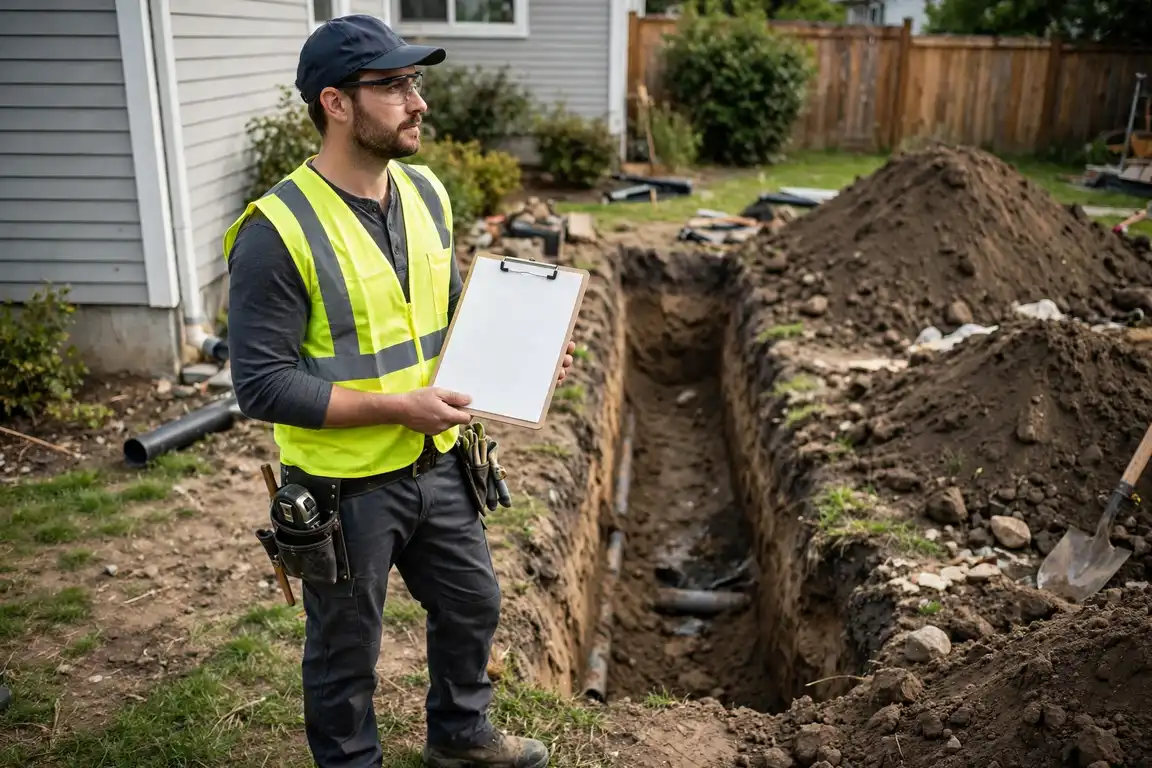
Ask what a sewer line repair costs and the honest answer is always the same: it depends. Two homes on the same street can face very different projects depending on how deep the pipe sits, what it is made of, how it failed, and what sits on top of it. Understanding the cost factors puts you in a much stronger position when you review a contractor's proposal.
This guide walks through the factors that shape the cost of a sewer repair in Peabody, with no hype and no invented figures. The goal is simple: when you get an estimate, you will know exactly what you are paying for and which questions to ask.
The Repair Method Sets the Baseline
The single biggest cost factor is how the repair is performed. A small spot repair on an accessible section of pipe is a fundamentally different job than a full-length rehabilitation. Trenchless methods such as trenchless sewer repair typically involve less excavation and restoration, which affects both labor time and the condition your yard is left in, while traditional open-trench work involves more digging but may be the only option for collapsed or badly misaligned pipe.
Within trenchless work, the technique matters too. Pipe lining and pipe bursting solve different problems and involve different equipment and materials. A contractor should explain why the recommended method fits your specific defect, not just quote a technique. Method choice should follow the diagnosis, which is why a camera inspection is the foundation of any credible estimate.
Depth and Length of the Damaged Section
Deeper pipe means more excavation, more soil to move and shore up, and more time on site. In Massachusetts, sewer laterals must sit below the frost line, so depth is rarely trivial, and lines that run deep under a yard or driveway add meaningful labor compared with shallow ones. Length matters the same way: repairing a ten-foot section and rehabilitating sixty feet are different projects with different material and labor requirements.
This is also why accurate diagnosis pays for itself. A camera inspection with a locator marks exactly where the damage starts and stops and how deep it sits, so the estimate reflects the real scope instead of a worst-case guess. Vague estimates often hide vague scoping.
Soil and Ground Conditions
New England soil is famously unforgiving. Rocky ground, ledge, or a high water table can slow excavation dramatically and require specialized equipment or dewatering. Clay-heavy soil holds water and adds weight and instability to trench walls, which means more shoring and more careful work. Sandy, stable soil is the easy case, and it is not the case on every Peabody lot.
Ground conditions also affect trenchless work. Pipe bursting needs soil that the bursting head can displace, and lining needs a host pipe with enough integrity to hold the liner. Unusual conditions discovered mid-project are a classic source of cost changes, which is another reason thorough pre-work investigation protects your budget.
Access and Obstacles Above Ground
What sits above the pipe shapes the job as much as what sits below it. A lateral running under open lawn is the straightforward scenario. One running under a driveway, patio, mature trees, retaining walls, or a garage slab adds demolition, restoration, or rerouting to the project, and each of those carries its own cost.
Access for equipment matters too. If excavators or bursting rigs cannot easily reach the work area, the crew spends more time on setup and material handling, or the project has to be sequenced in smaller phases. When you walk the property with a contractor, point out everything above the suspected line path; experienced contractors factor these obstacles into the estimate rather than discovering them later.
Permits, Inspections, and Restoration
Massachusetts requires permits for sewer work, and municipal inspections are part of the process. Permit fees and the scheduling around inspections are legitimate line items in a proposal, not padding. Restoration is the other often-underestimated factor: backfill compaction, topsoil, seeding or sod, and repair of any cut pavement or walkways all take labor and materials.
Ask every contractor how restoration is handled and what condition they promise to leave the property in. The cheapest proposal sometimes achieves its number by skimping on restoration, leaving you with a sunken trench line or a patch of dead lawn to fix yourself. Comparing proposals means comparing the full scope, including what happens after the pipe is fixed.
How to Get an Estimate You Can Trust
A trustworthy estimate starts with a camera inspection, identifies the exact defect and its location, specifies the repair method and why it was chosen, and itemizes the major cost drivers above. Be wary of any quote given without looking inside the pipe: without a diagnosis, the number is a guess, and guesses in sewer work tend to grow.
Get more than one proposal for major work, and compare scopes rather than just bottom lines. Ask each contractor what happens if conditions differ from expectations once work begins. For a clear, camera-based assessment of what your repair actually involves, call Sewer Line Repair Works at (833) 713-2101. And if the inspection shows damage too extensive for repair, it is worth reading about sewer line replacement so you understand the full range of options before you decide.