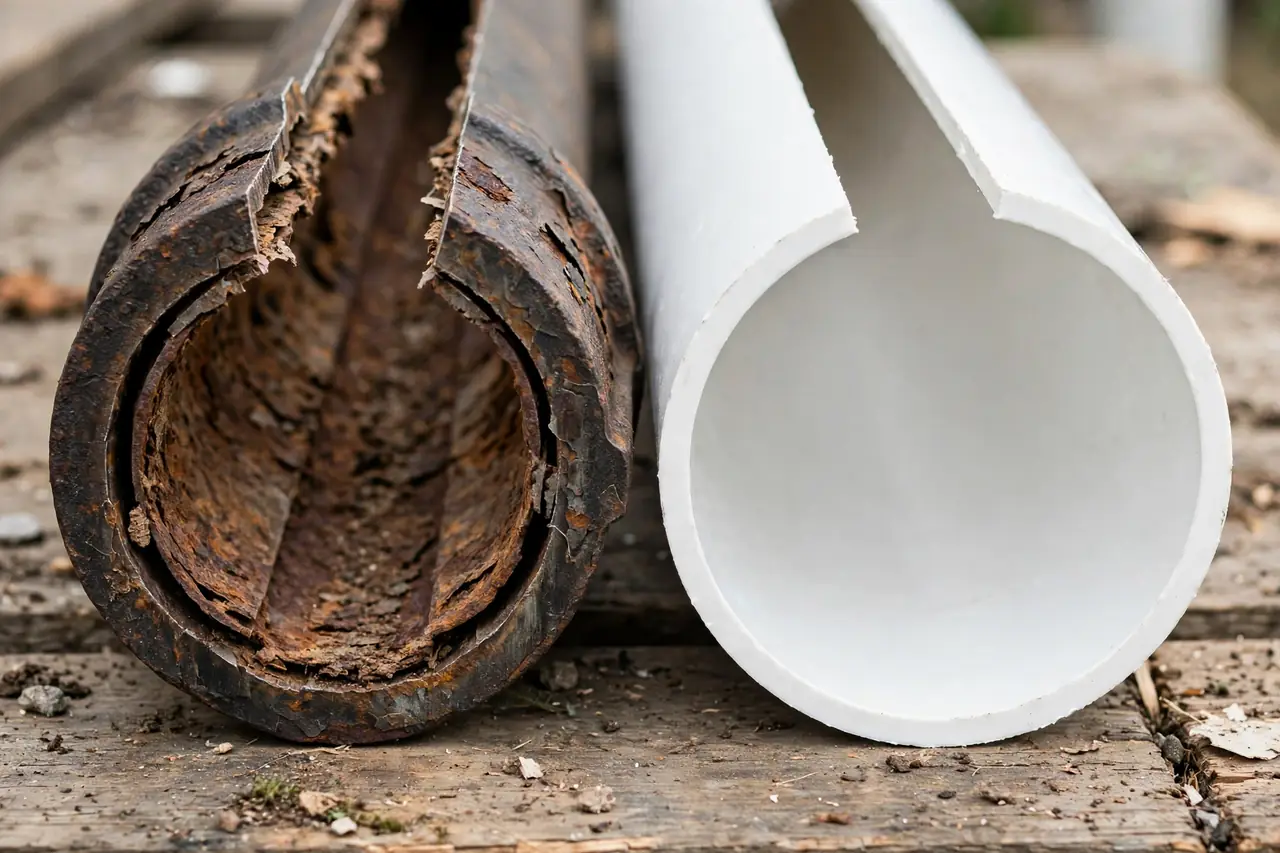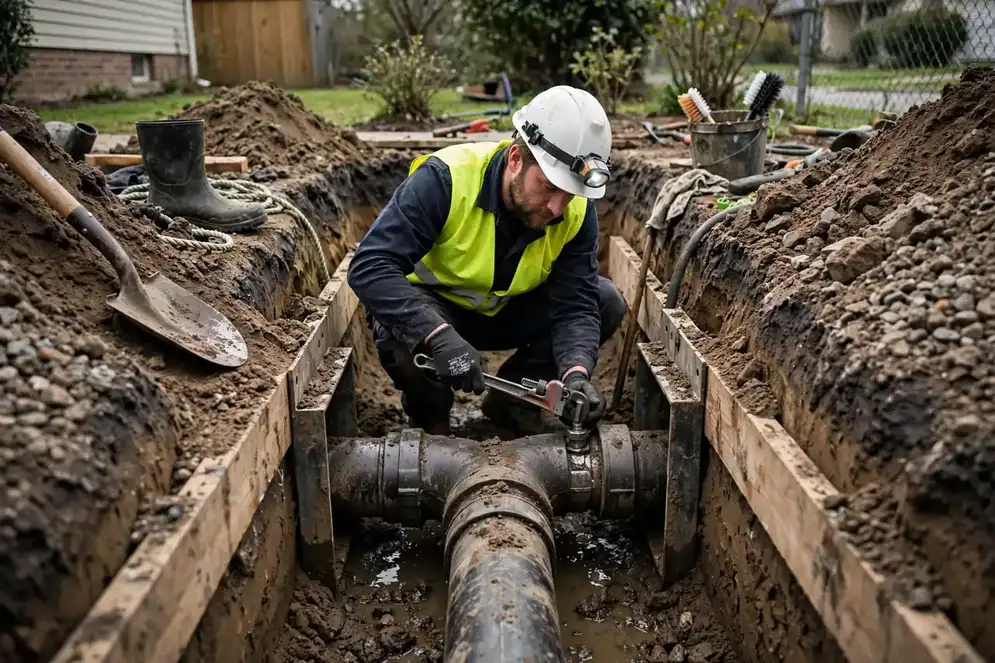
Traditional sewer replacement means excavating a trench from your house to the street — tearing up driveways, patios, landscaping, and sometimes mature trees. The restoration alone can cost thousands and take weeks. Trenchless methods avoid almost all of that.
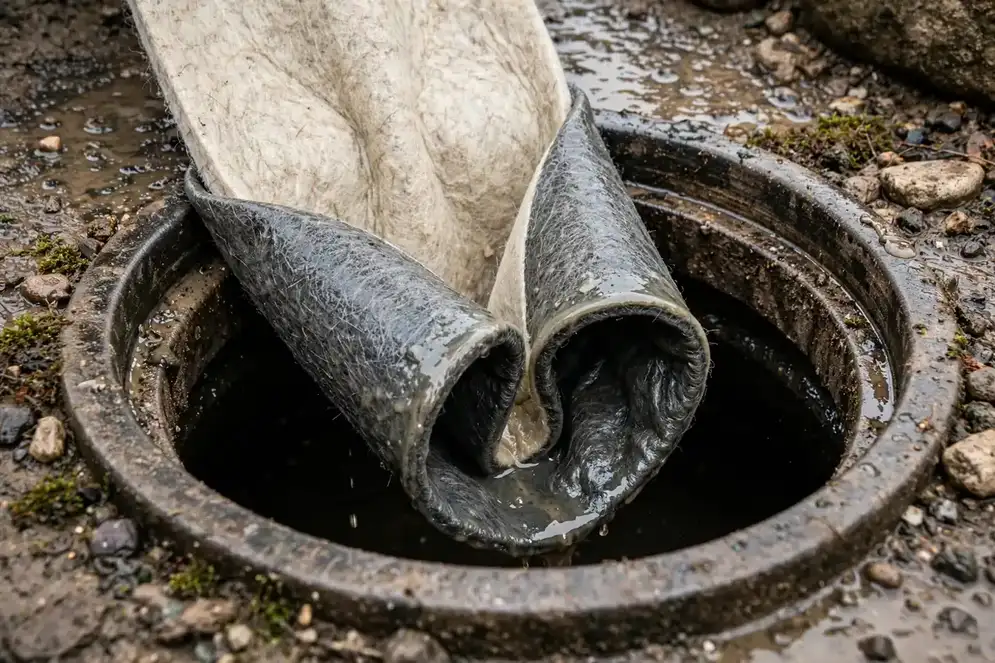
Cured-in-place pipe (CIPP) lining works like this: a felt tube saturated with epoxy resin is inserted into your old pipe through an existing access point, then inflated and cured with heat or UV light. The result is a brand-new pipe inside the old one — jointless, root-proof, with a 50-year design life. Your yard stays intact.
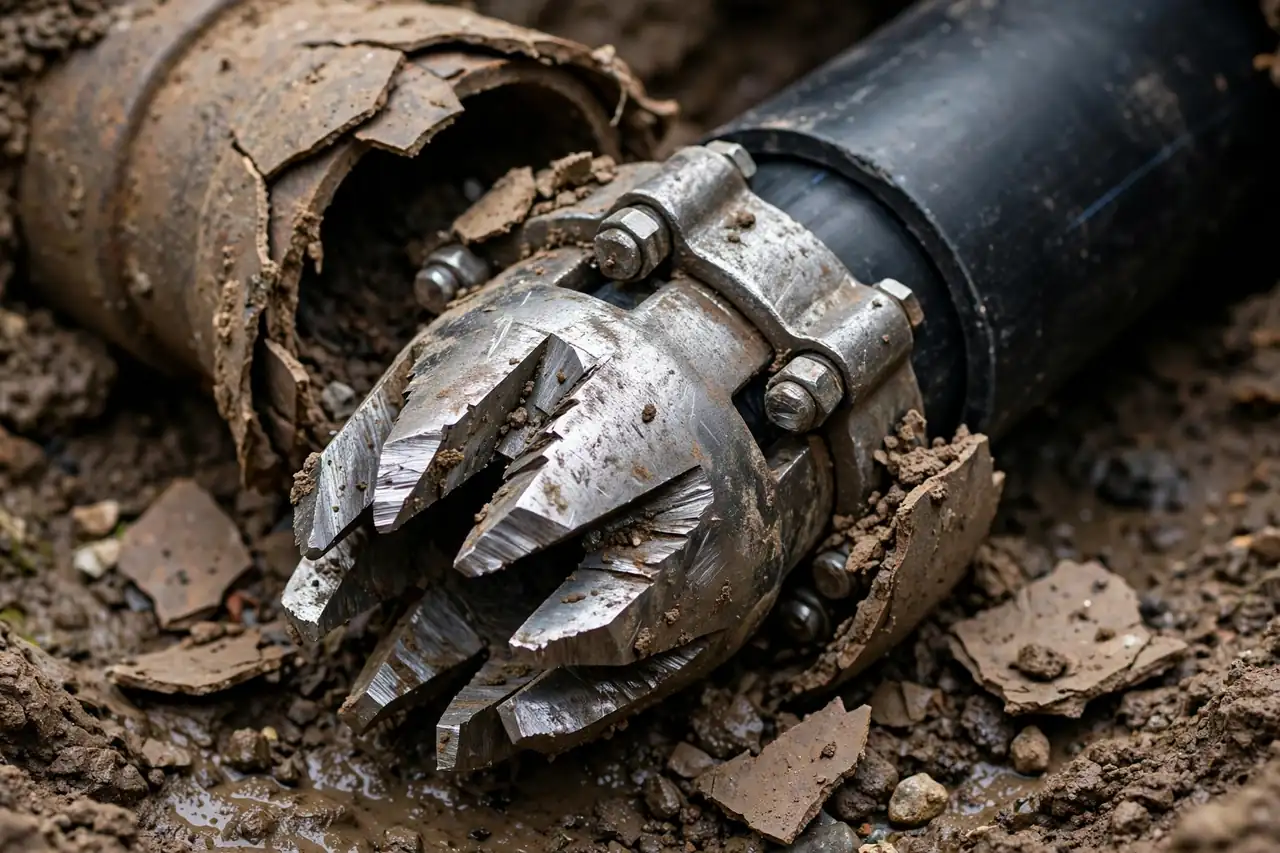
Pipe bursting is the trenchless replacement option: a bursting head is pulled through the old line, fracturing it outward while simultaneously pulling a new high-density polyethylene (HDPE) pipe into place. Two small pits — one at the house, one at the street — are the only excavation. The new HDPE is fused into one continuous length with no joints to fail.
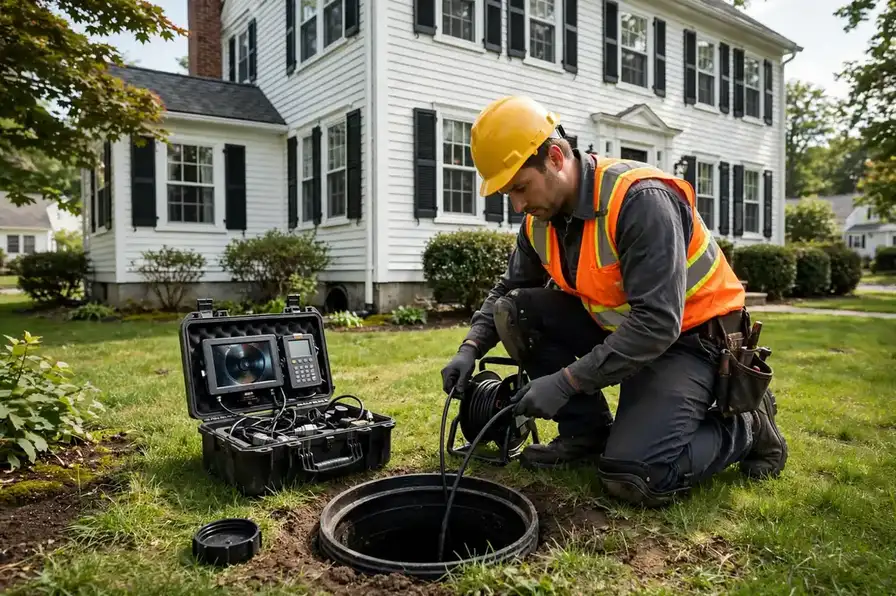
Not every line qualifies for trenchless. A camera inspection determines candidacy: the pipe needs enough structural integrity to guide the liner or bursting head. Fully collapsed sections, severe bellies holding standing water, or lines with major misalignment may still need traditional excavation. The inspection footage makes this clear before any commitment.