
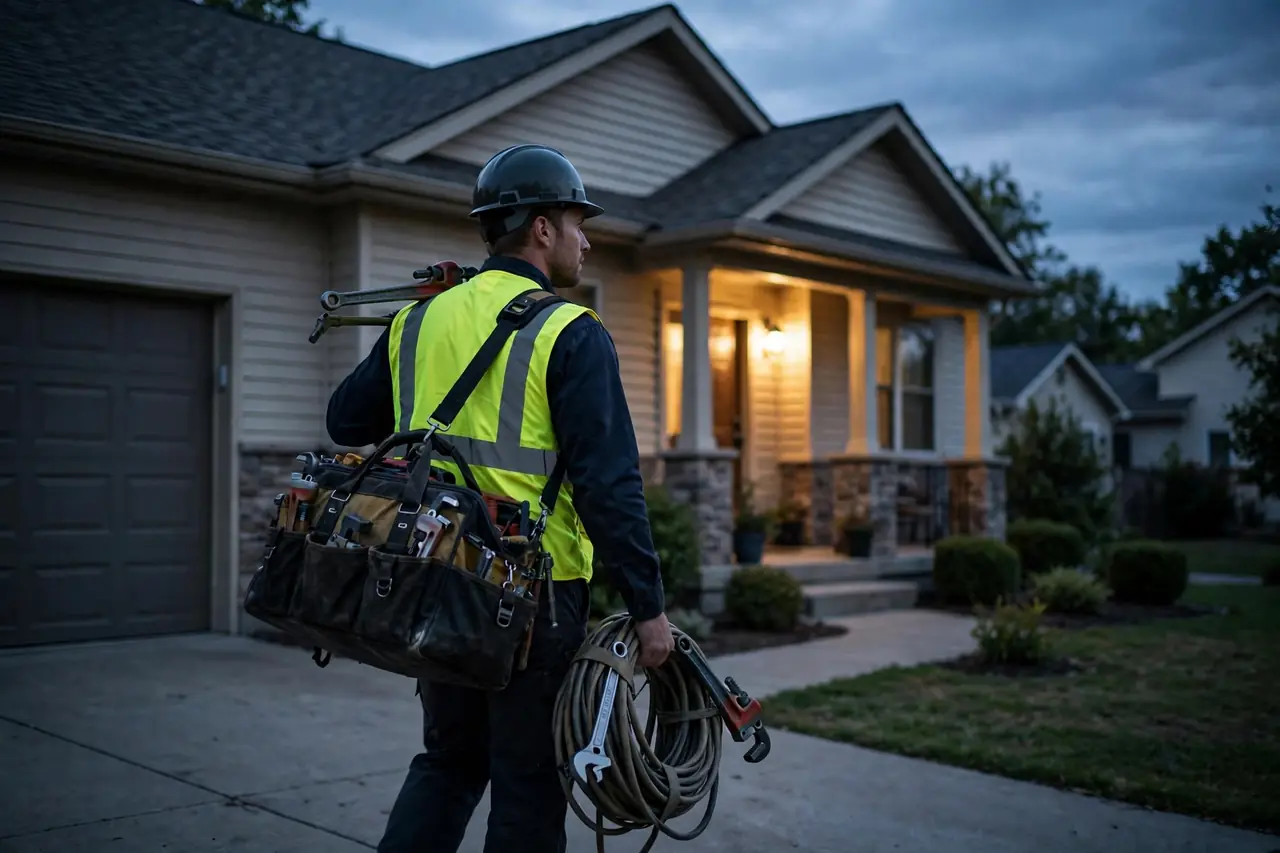
It is 9 PM, the basement floor drain is burping sewage, and every toilet in the house is gurgling. Sewer emergencies do not schedule themselves politely — they arrive during nor'easters, holiday weekends, and the middle of the night. Knowing what happens when you call for help turns panic into a plan.
Emergency sewer repair follows a predictable sequence: triage on the phone, rapid assessment on site, camera diagnosis, options you can actually choose between, and the repair itself. Understanding each step helps you protect your home in the first hour and make clear decisions under pressure.
Here is the full sequence, from your first call to the final cleanup.
The First Call: Triage in Minutes
The first call is about stopping the damage. Expect direct questions: what is backing up and where, whether multiple fixtures are affected (that points to the main lateral, not a single drain), whether you have had prior issues, and where your cleanout is. You will get immediate guidance — stop running water, do not flush, locate the cleanout — because every gallon you send down adds to the backup.
Good triage also sets expectations: an arrival window, what the technician will need from you (clear access to the basement or cleanout, someone who can authorize work), and what the first steps on site will be. If sewage is actively spreading, you will hear containment advice first and diagnostics second. The call should leave you calmer and with a job to do, not just a wait.
On Site: Assessment Before Action
The technician's first job is to confirm what is happening and rule out what is not. That means checking which fixtures are affected, looking at the cleanout, and getting a sense of whether the blockage is in your lateral or further out. In Peabody, heavy rain and spring melt can overwhelm municipal lines and push water back toward homes — knowing whether the problem is yours or the city's changes the response.
Access matters in an emergency. A buried or inaccessible cleanout slows everything down, which is why technicians may ask about its location on the phone. Once access is established, the priority is restoring flow safely — and a sound approach is usually a camera look before any aggressive clearing, so the crew knows what they are dealing with instead of guessing.
Camera Diagnosis: Seeing the Real Problem
A sewer camera inspection is the turning point of most emergency calls. The camera shows whether you are dealing with a root mass, a grease blockage, a collapsed section, or a belly full of standing water — and each one points to a different fix. Without the camera, clearing a line is guesswork; with it, it is a targeted repair.
You will typically see the footage yourself, and you should — it turns an abstract 'blockage' into something concrete you can evaluate. The technician can show you exactly where the problem is, how far from the house, and how bad. That shared view is what makes the next step — choosing a repair — a real decision instead of a leap of faith.
Your Options, Explained Plainly
Emergency does not mean no choices. A soft blockage — roots, grease, debris — usually clears with professional cleaning equipment, and the line goes back into service the same visit. Structural damage — a break, collapse, or severe offset — needs repair, and you will hear the options: spot repair, trenchless lining or bursting, or full replacement, depending on what the camera showed.
Expect honest talk about timing: what must happen tonight (stop the backup, restore basic function) versus what can be scheduled (a permanent repair in daylight with proper planning). A reputable emergency response stabilizes first and sells second. If a full repair cannot happen immediately, you should leave the visit with the line flowing, the problem documented on video, and a clear written plan for the permanent fix. For emergencies in the Peabody area, emergency sewer repair service starts with that stabilization — call (833) 713-2101 any time sewage is backing up.
Cleanup, Aftercare, and Prevention
Sewage is a contaminant, not just a mess — cleanup means disinfection, not just mopping. Porous materials that soaked up sewage usually cannot be salvaged; hard surfaces need thorough cleaning with appropriate disinfectants. Industrial drying equipment is often needed to bring moisture levels down inside walls and subfloors, since lingering dampness leads to mold long after the visible mess is gone. Document everything with photos before cleanup for insurance purposes, and keep the camera footage and invoice with your records.
After the emergency, prevention is the real fix: if roots caused it, schedule tree root removal and repair the entry point; if grease, change what goes down the drains and consider scheduled sewer line cleaning; if the pipe is failing, plan the permanent repair before the next storm tests it. Emergencies are expensive teachers — the lesson is worth keeping. Hold on to the camera footage from the emergency visit as well; it becomes the baseline your next contractor uses to tell whether the problem is stable or growing.