
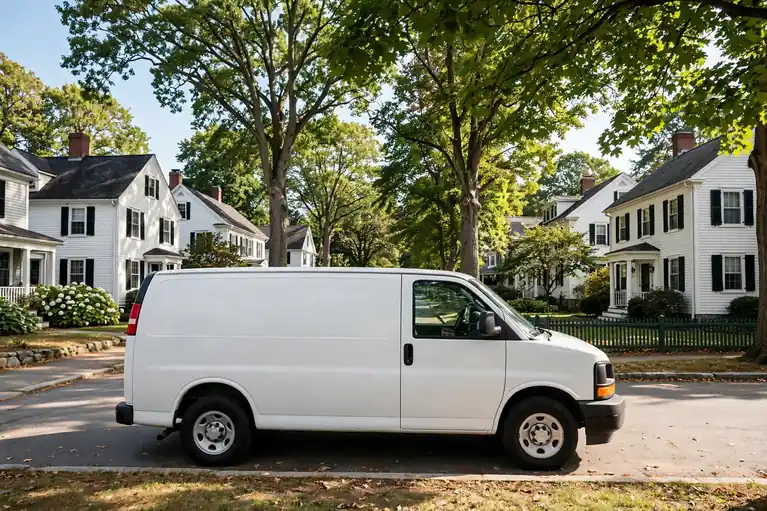
| ZIP | 01930 |
|---|---|
| Housing | Cape Ann's 400-year layering: First Period houses (White–Ellery House 1710; William Haskell House c. 1670); 18th-century Georgian (Middle Street) and Federal seaport buildings; dense mid-to-late-19th-century Greek Revival and Italianate sea-captain houses around East Gloucester Square; 1920s grand summer estates — Hammond Castle (1926–29), Beauport (1907); 20th-century infill and seasonal cottages. |
| Common pipe materials | 18th–19th-century homes: retrofitted systems (typically mid-20th-century cast iron + clay tile) — camera first, no era assumption. Early-to-mid-20th-century stock: cast iron with clay tile laterals, typical for the era. Post-1980: PVC. |
| Foundations | Shallow stone/rubble cellars in the oldest homes; Cape Ann granite ledge is never far — many homes sit partially on exposed bedrock with shallow or partial basements. Blasting or ledge encounters are a real excavation risk. Mid-century homes have full basements where the ledge allowed. |
| Soil & drainage | Thin, rocky glacial soils — the USDA 'Annisquam' series was typed in Gloucester itself: fine sandy loam over dense till just 20–30 inches down, with 5–25% cobbles and stones. Granite ledge outcrops are common; drainage is fast on slopes but poor in harbor-adjacent low pockets. Coastal flood and storm-surge exposure around the Inner Harbor and coves. |
| Key routes/landmarks | Cape Ann Museum (includes the 1804 Captain Elias Davis house); Hammond Castle; Beauport (Henry Davis Sleeper house, 1907); Rocky Neck artists' colony; East Main Street / East Gloucester Square, Middle Street, Washington Street (Lanesville). Branch post offices at Lanesville (1068 Washington St), Magnolia, and Riverdale all sit under 01930. |
Gloucester, MA 01930: Housing, Pipes, and Soil Facts
Gloucester, MA 01930 is Cape Ann's 400-year layering of housing built over granite — and that granite defines sewer work here more than any other factor. The stock runs from First Period houses (the White–Ellery House of 1710; the William Haskell House of c. 1670) through 18th-century Georgian buildings on Middle Street and Federal seaport architecture, dense mid-to-late-19th-century Greek Revival and Italianate sea-captain houses around East Gloucester Square, the 1920s grand summer estates — Hammond Castle (1926–29) and Beauport, the Henry Davis Sleeper house of 1907 — to 20th-century infill and seasonal cottages. Four centuries of construction, one constant underneath: ledge.
Underground, the 18th-and-19th-century homes carry retrofitted systems — typically mid-20th-century cast iron plus clay tile — installed long after the houses were built. Camera inspection is mandatory here with no era assumption: the pipe history is modernization, not original construction. Early-to-mid-20th-century stock runs cast iron with clay tile laterals, typical for the era; post-1980 builds are PVC. Foundations track the rock: shallow stone and rubble cellars in the oldest homes, many houses sitting partially on exposed bedrock with shallow or partial basements, and full basements in mid-century homes only where the ledge allowed.
The 01930 ZIP covers the waterfront and the villages — branch post offices at Lanesville (1068 Washington St), Magnolia, and Riverdale all sit under 01930 — with landmarks like the Cape Ann Museum (home to the 1804 Captain Elias Davis house), the Rocky Neck artists' colony, East Main Street and East Gloucester Square, Middle Street, and Washington Street in Lanesville. Wherever your Gloucester home sits, the working assumption is the same: thin soil, shallow rock, and old pipe.
How Sewer Services Work in Gloucester
Gloucester is the ledge town, and that fact should be stated plainly in every estimate: thin rocky soil over granite means trenching routinely hits rock, making trenchless pipe bursting or relining the cost-effective default and open-cut the expensive exception. Blasting or ledge encounters are a real excavation risk here — not a theoretical one — and an estimate that prices a Gloucester dig like a dig in deep till is an estimate that will change. We price the rock reality from the start, which is why trenchless sewer repair in Gloucester 01930 leads most of our recommendations in this ZIP.
Harbor-adjacent homes combine the town's highest-risk elements: 150-to-300-year-old stone foundations plus retrofitted clay and cast-iron laterals, sitting over high groundwater near the Inner Harbor. Camera inspection is mandatory on these properties, and infiltration from that high groundwater must be ruled out before any lining — a liner over actively infiltrating joints near the harbor will not hold. Our sewer camera inspection in Gloucester 01930 maps both the pipe condition and the infiltration picture, including exactly where the pipe dives under ledge.
Equipment logistics are the third Gloucester factor. Steep, narrow streets — the East Gloucester hills, Rocky Neck — constrain staging and favor compact trenchless rigs over full-size excavation spreads. We plan access around the specific street before quoting, because a method that cannot get its equipment to the lateral is not a real option. On low harbor streets, we also discuss storm-surge backflow protection: backwater valves are a genuine need there, not an upsell.
Pipe Materials Under Gloucester Homes, by Era
In the 18th-and-19th-century homes — the First Period houses, the Georgian and Federal buildings, the sea-captain houses around East Gloucester Square — the underground systems are retrofits, typically mid-20th-century cast iron with clay tile laterals installed when modern plumbing arrived. No era assumption applies: two houses of the same vintage can have different laterals depending on when each was modernized and what the ledge allowed the installer to do. Camera first, always, and the repair plan follows the footage.
Early-to-mid-20th-century stock is the predictable generation: cast iron with clay tile laterals, typical for the era. The clay shows the standard joint-offset and root-intrusion pattern; the cast iron shows scale and tuberculation. But Gloucester adds a wrinkle even here: shallow rock trenches with poor cover mean these laterals have lived with minimal soil protection, making them more vulnerable to surface loading and frost penetration than the same pipe in deeper soil elsewhere.
Post-1980 construction runs PVC, which resists roots and joint movement — though even PVC laterals in Gloucester can be damaged by ledge shifting or by the poor bedding that thin, rocky soil imposes. Whatever the era, the camera pass must map exactly where the pipe dives under ledge, because the rock encounters — not just the pipe condition — determine which repair methods are practical.
Soil, Water Table, and Drainage in Gloucester
Gloucester's soils were literally typed here: the USDA 'Annisquam' series was described in Gloucester itself — fine sandy loam over dense till just 20 to 30 inches down, with 5 to 25 percent cobbles and stones. Above that thin soil sits some of the hardest digging on the North Shore: granite ledge outcrops are common, and many laterals lie in shallow rock trenches with poor cover. Open-trench replacement in these conditions regularly turns into rock excavation, which is the economic argument for trenchless methods in a single paragraph.
Drainage is fast on the slopes and poor in the harbor-adjacent low pockets — and those low pockets are where the water table runs high. Near the Inner Harbor and the coves, infiltration through cracked joints is a standing condition, not a seasonal one, and coastal flood and storm-surge exposure add surge-driven surcharge of low laterals during nor'easters. Wind-driven rain is a chronic basement-moisture driver in the older homes, which matters because damp stone cellars and sewer backups compound each other in the same low spaces.
The practical consequence: in Gloucester, the camera inspection is doing double duty — documenting pipe condition and mapping the rock. A lateral that runs clean through soil for 40 feet and then dives under ledge for the last 20 is a different job than a lateral in soil all the way, and only the camera shows you which one you have before anyone quotes.
That same rock logic applies to the branch villages under 01930 — Lanesville, Magnolia, and Riverdale share the thin-soil-over-ledge profile, so a lateral in Lanesville gets the same rock-mapped camera pass as one on the waterfront.
Common Sewer Line Problems We See in Gloucester
Rock-damaged and shallow-cover laterals lead the Gloucester list. Laterals in shallow rock trenches with poor cover take more abuse from surface loading and frost — and where ledge has shifted or the original rock trench was roughly cut, pipes crack at the rock contact points. The symptom is often a sudden failure rather than a gradual one: a line that worked last month collapses at a ledge pinch point. Our sewer line replacement in Gloucester 01930 planning always accounts for the rock path, because replacing the pipe without respecting the ledge just sets up the next failure at the same point.
Root intrusion and joint offset in the retrofitted clay laterals is the second pattern — the classic clay-tile story, complicated by Gloucester's thin soils that put roots and pipes in the same shallow layer. Where the pipe retains structural integrity, we cut roots on camera and seal the entries; our tree root removal in Gloucester 01930 work pairs the cutting with a full condition map so the repair addresses every compromised joint. Where roots have destroyed the line's structure, pipe bursting through the existing path avoids the rock excavation that open-cut would require.
Infiltration and surge backflow round out the list on harbor-adjacent streets. High groundwater near the Inner Harbor infiltrates cracked joints continuously, and nor'easter surge can surcharge low laterals from the receiving end. On these streets, backup-prevention and watertight joint sealing are as important as pipe replacement itself — a new pipe with unsealed joints in this groundwater will inherit the old pipe's problems.
Trenchless vs. Traditional Sewer Repair in Gloucester
In Gloucester, trenchless is frequently the only economical path — not just the convenient one. Pipe bursting pulls a new line through the old pipe's path without excavating the rock trench the original sits in; cured-in-place lining creates a new structural interior from small access pits. Both methods dodge the blasting-or-ledge-encounter risk that makes open-cut the expensive exception here, and both work with the compact rigs that steep, narrow streets like the East Gloucester hills and Rocky Neck demand.
Open-cut replacement earns its place where the camera shows a collapsed section that cannot carry a liner or bursting head, or a belly that needs regrading — but in Gloucester every open-cut estimate must price the rock explicitly. An estimate that treats a Gloucester dig like a soil dig will not survive first contact with the ledge. We would rather quote the rock honestly than revise it mid-job.
The Gloucester sequence: camera first (mapping pipe condition and ledge encounters), infiltration ruling on harbor-adjacent properties, then the method that fits both. Call (833) 713-2101 and we will start with the inspection that shows exactly what the rock and the pipe are doing under your street.
Services in This Area
Commercial Sewer Services in Gloucester
Gloucester, MA 01930.
Learn moreEmergency Sewer Repair in Gloucester
Gloucester, MA 01930.
Learn morePipe Bursting in Gloucester
Gloucester, MA 01930.
Learn morePipe Lining (CIPP) in Gloucester
Gloucester, MA 01930.
Learn moreSewer Camera Inspection in Gloucester
Gloucester, MA 01930.
Learn moreSewer Leak Detection in Gloucester
Gloucester, MA 01930.
Learn moreSewer Line Cleaning in Gloucester
Gloucester, MA 01930.
Learn moreSewer Line Installation in Gloucester
Gloucester, MA 01930.
Learn moreSewer Line Replacement in Gloucester
Gloucester, MA 01930.
Learn moreSewer Maintenance in Gloucester
Gloucester, MA 01930.
Learn moreTree Root Removal in Gloucester
Gloucester, MA 01930.
Learn moreTrenchless Sewer Repair in Gloucester
Gloucester, MA 01930.
Learn more