
| ZIP | 01915 |
|---|---|
| Housing | One of the older housing stocks on the North Shore: 43% of units built before 1939, another 23% in 1940–1959, 18% in 1960–1979; median home age about 65 years. Downtown holds older colonials and Capes, many divided into apartments or condos, plus oceanfront Victorians, 17th-century 'antique' homes, early-20th-century stock, and newer construction. |
| Common pipe materials | Pre-1940 (the largest cohort): cast iron inside the house with vitrified clay tile laterals, typical for the era. 1940s–60s: cast iron transitioning to clay or early ABS; 1980s+: PVC, typical for newer builds. |
| Foundations | Full basements are standard in pre-1960 homes — often fieldstone or rubble in the oldest, poured concrete or block in mid-century. Many downtown Victorians and colonials have finished or converted basement units. Post-1980 construction mixes basement, crawl, and slab. |
| Soil & drainage | Essex County glacial terrain: the USDA 'Essex' soil series is a well-drained gravelly sandy loam formed in subglacial till, with pockets of dense till 20–30 inches down. Low areas near the harbor and tidal inlets sit on very poorly drained tidal-marsh muck; the water table runs high near the harbor and in marsh-adjacent streets. |
| Key routes/landmarks | Lynch Park (waterfront park, once President Taft's summer home); Cabot Street (downtown artery, annual Arts Fest); Endicott College and Montserrat College of Art; Beverly High School, 100 Sohier Rd. Beverly Post Office at 151 Rantoul St serves 01915. |
Beverly, MA 01915: Housing, Pipes, and Soil Facts
Beverly, MA 01915 is one of the oldest housing markets on Boston's North Shore, and that age defines nearly every sewer call we run here. Fully 43 percent of the city's housing units were built before 1939, another 23 percent went up between 1940 and 1959, and 18 percent date from 1960 to 1979, leaving a median home age of roughly 65 years. When a lateral has been in the ground for seven, eight, or nine decades, the failure modes are predictable — but the exact condition of your line is never something to guess at, which is why our work in the 01915 ZIP always begins with a camera.
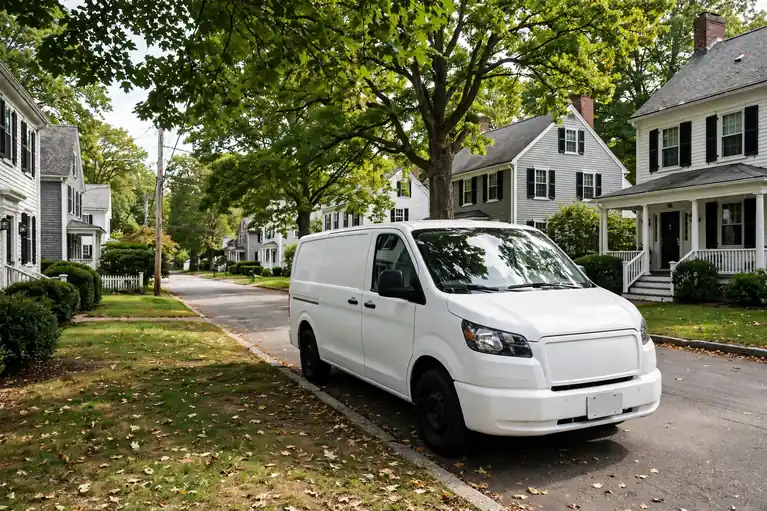
The stock itself is a mix. Downtown Beverly holds older colonials and Capes, many divided over the years into apartments or condominiums, with oceanfront Victorians along the water. Some homes date to the 17th century — true 'antique' stock — while newer construction fills later subdivisions. Neighborhoods around landmarks like Lynch Park on the waterfront (once President Taft's summer home), the Cabot Street downtown corridor with its annual Arts Fest, the Endicott College and Montserrat College of Art campuses, and Beverly High School at 100 Sohier Rd all feed into the same 01915 service footprint that the Beverly Post Office at 151 Rantoul St covers.
The practical meaning for homeowners: Beverly's underground infrastructure is generational. A 1925 colonial downtown may still carry its original clay-tile lateral with century-old cast-iron stack inside, while a 1990s build on the same street runs PVC. Multi-unit conversions add fixture load that old lines were never sized for. We map all of this before quoting anything, because sewer work priced blind in a town this old tends to be priced wrong.
How Sewer Services Work in Beverly
With 43 percent of Beverly homes built before 1939, camera inspection is non-negotiable before any lining or replacement work here. The signature finds in the 01915 ZIP are vitrified clay-tile laterals with root intrusion at offset joints — joints that have had close to a century of freeze-thaw movement — plus century-old cast iron narrowed by scale or sagging into bellies that hold standing water. Our sewer camera inspection in Beverly 01915 documents every joint, offset, root mass, and belly on HD video, so the repair plan matches what is actually underground instead of what a typical-for-the-era guess says should be there.
Groundwater discipline comes next, and in Beverly it matters more than most towns admit. The water table runs high near the harbor and in marsh-adjacent streets, and infiltration checks precede every trenchless lining job we quote: groundwater inflow can defeat a liner if joints are not sealed first, turning a 'repaired' line into a line that still leaks. Where infiltration shows up on camera — water visibly entering through cracked joints — we address the sealing before any pipe lining in Beverly 01915 is scheduled.
Access logistics shape the method choice in much of the city. The narrow downtown streets around Cabot Street limit equipment staging, so pipe-bursting and trenchless methods are often the practical route rather than open trenches that block a whole block. Trenchless sewer repair in Beverly 01915 lets us replace a failing clay lateral from two small pits instead of excavating a front yard, driveway, or sidewalk — an advantage homeowners on tight downtown lots notice immediately.
Pipe Materials Under Beverly Homes, by Era
The pre-1940 cohort — Beverly's largest — typically pairs cast-iron drain and waste piping inside the house with a vitrified clay tile lateral running to the street main. Clay tile is the workhorse of its era, and its failure pattern is well documented: individual hub joints shift with frost heave, cracks open, and tree roots enter at every compromised joint. Inside, century-old cast iron develops tuberculation and scale that narrows the pipe and creates snag points, while settled sections form bellies where solids collect. We treat every line of this vintage as camera-first, no exceptions.
Homes from the 1940s through the 1960s are the transition generation: cast iron still dominates the interior stacks, while laterals of this period run clay tile or early ABS. Early ABS installations are generally serviceable but can show joint-separation issues at old connections, especially where a later addition tied into the original line. Anything from the 1980s onward is typically PVC, which fails far less often — but even PVC laterals in Beverly deserve a look, because a broken or misaligned connection at the foundation wall does not care what material the rest of the line is.
One Beverly-specific assessment we recommend for harbor-side and marsh-adjacent properties: corrosion review on older cast iron. Coastal sections of 01915 sit in saltwater-influenced soil and brackish groundwater conditions, and exterior corrosion accelerates where salty groundwater meets aging ferrous pipe. If your home sits on an oceanfront road or near a tidal inlet and your stacks are original cast iron, say so when you call (833) 713-2101 and we will build a corrosion check into the inspection.
Soil, Water Table, and Drainage in Beverly
Beverly sits on classic Essex County glacial terrain. The USDA's 'Essex' soil series — named for Essex County itself — is a well-drained gravelly sandy loam formed in subglacial till, but with pockets of dense till just 20 to 30 inches below the surface. On upland streets this drains well and trenching is straightforward; where that dense till hardpan shows up, excavation gets slower and trenchless methods gain an edge on both schedule and surface disruption.
The picture changes sharply near the water. Low areas near Beverly Harbor and the tidal inlets sit on very poorly drained tidal-marsh muck soils, and the water table runs high through those streets. Coastal flood exposure adds another layer on oceanfront roads. For sewer work this means saturated trench conditions, infiltration into cracked laterals during and after storms, and curing conditions for liners that must account for groundwater pressure — all reasons we schedule infiltration assessments on harbor-side jobs rather than treating them as routine.
Weather completes the cycle. Nor'easters bring heavy rain, storm surge, and deep winter freeze; frost depth drives freeze-thaw heaving of the soil around laterals, which is the slow-motion force that offsets clay joints year after year. Spring melt and rain can surcharge low-lying lines, and coastal sections see saltwater-influenced corrosion conditions on buried ferrous pipe. Seasonal timing matters too: after a heavy nor'easter season, infiltration-driven backup calls spike in the low streets near the harbor.
Common Sewer Line Problems We See in Beverly
Root intrusion at offset clay joints is the defining call in the 01915 ZIP. Mature street trees and yard trees send roots toward every cracked hub and shifted joint in a clay-tile lateral, and the intrusion grows until flow is restricted or the joint is forced further open. If your Beverly home has slow drains across multiple fixtures, gurgling, or recurring clogs that snaking clears only temporarily, roots in the lateral are the first suspect. Our tree root removal in Beverly 01915 work pairs root cutting with a camera pass and, where the pipe still has structural integrity, a lined or point-repaired joint so the roots do not simply grow back through the same opening.
The second pattern is cast-iron deterioration inside older homes: scale buildup that narrows the line, roughened interiors that snag paper and waste, and bellies — settled sections that hold water and solids. Bellies are a Beverly basement-backup driver because they reduce effective slope; a line that 'worked fine for years' starts backing up when a belly deepens or scale reaches critical thickness. Camera footage with measured slope tells us whether descaling, spot repair, or full replacement is the honest fix.
Downtown conversions add a third pattern. Colonials and Capes divided into apartments or condos put more fixture load on laterals sized for a single family, and finished or converted basement units turn a backup into a high-damage event. If your building was converted, ask us to check line capacity alongside condition — an undersized but intact lateral may need upsizing at replacement time rather than a same-diameter fix.
Trenchless vs. Traditional Sewer Repair in Beverly
Trenchless methods win most Beverly jobs on practicality alone. Cured-in-place pipe lining creates a new pipe inside the old one with access from small pits — ideal under Cabot Street-area lots where staging an excavator is not an option, and ideal beneath finished downtown basements, driveways, and mature landscaping. Pipe bursting pulls a new line through the old one's path, replacing clay tile entirely without a continuous trench. Both approaches dodge the two things that make open trenching expensive in Beverly: dense-till hardpan and high groundwater near the harbor, either of which can turn a 'simple dig' into dewatering and shoring work.
Open-cut replacement still has its place: collapsed sections that cannot carry a liner or a bursting head, severe bellies where regrading is the only cure, and lines so shallow or misaligned that a trench is genuinely the simpler path. Where we do excavate, fieldstone and rubble foundation walls in the oldest homes get hand-careful treatment — these walls predate modern mortar and do not tolerate a careless bucket near them.
The decision tree we follow is the same on every 01915 job: camera first, infiltration assessment second, then the method that fits the pipe's actual condition and the property's real constraints. For a full comparison of options on your street, see our sewer line replacement in Beverly 01915 overview, or give us a call and we will walk through what the camera shows.
What to Expect When You Call Sewer Line Repair Works in Beverly
The first step when you call (833) 713-2101 is a short conversation about what you are seeing — slow drains, backups, odors, soggy spots in the yard — plus the age of your home and, if you know it, what pipe material is underground. That context tells our technician what to look for before the camera ever goes in, and it is especially useful in Beverly where a 17th-century antique and a 1980s build can sit on the same block with completely different infrastructure.
On site, we run the camera from an accessible cleanout (or pull a toilet if none exists) and record the full run to the street. You watch the footage with the technician, see every offset joint, root mass, belly, or infiltration point, and get repair options priced to the actual condition — spot repair, trenchless lining or bursting, or traditional replacement — with the trade-offs of each explained in plain language. No work starts without your approval, and the footage stays yours to keep.
Services in This Area
Commercial Sewer Services in Beverly
Beverly, MA 01915.
Learn moreEmergency Sewer Repair in Beverly
Beverly, MA 01915.
Learn morePipe Bursting in Beverly
Beverly, MA 01915.
Learn morePipe Lining (CIPP) in Beverly
Beverly, MA 01915.
Learn moreSewer Camera Inspection in Beverly
Beverly, MA 01915.
Learn moreSewer Leak Detection in Beverly
Beverly, MA 01915.
Learn moreSewer Line Cleaning in Beverly
Beverly, MA 01915.
Learn moreSewer Line Installation in Beverly
Beverly, MA 01915.
Learn moreSewer Line Replacement in Beverly
Beverly, MA 01915.
Learn moreSewer Maintenance in Beverly
Beverly, MA 01915.
Learn moreTree Root Removal in Beverly
Beverly, MA 01915.
Learn moreTrenchless Sewer Repair in Beverly
Beverly, MA 01915.
Learn more