
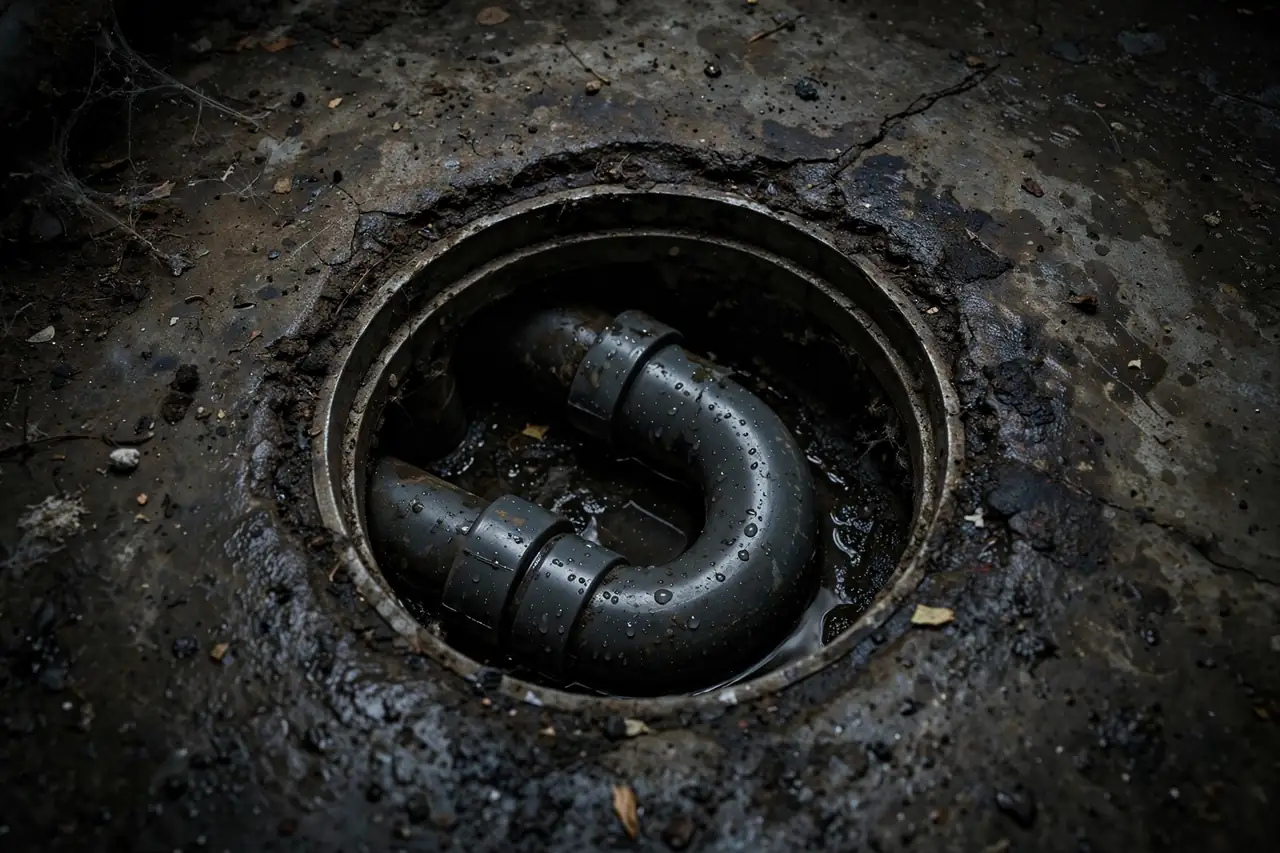
A rotten-egg smell rising from a basement floor drain, a rarely used bathroom, or a kitchen sink is more than a nuisance. It is often sewer gas, a mixture of gases produced as waste breaks down inside your sewer system. When that gas escapes into your home instead of venting safely outdoors, it can irritate your eyes, nose, and throat, and in higher concentrations it poses a genuine health concern.
In Peabody and across Massachusetts, older housing stock makes sewer gas odors especially common. Dried-out drain traps, corroded cast-iron vent stacks, cracked pipes, and the pressure swings that come with nor'easters and freeze-thaw cycles all give sewer gas more ways to slip inside. This guide explains what sewer gas contains, how it affects your health, and the steps to take when you smell it.
What Exactly Is Sewer Gas?
Sewer gas is a blend of gases released by decomposing organic matter in wastewater. The main components are hydrogen sulfide, methane, ammonia, and carbon dioxide. Hydrogen sulfide is the one you notice first: it smells like rotten eggs even at very low concentrations, which is why most people describe a sewer gas problem as a sulfur or egg odor.
Under normal conditions, these gases stay inside your plumbing and exit through vent pipes that run up through your roof. Problems begin when something in that sealed system fails. Dry drain traps, cracked or disconnected vent pipes, damaged sewer lines, loose toilet seals, and blocked vents can all let sewer gas flow backward into living spaces instead of out through the roof.
How Sewer Gas Affects Your Health
At the low concentrations typical of a mild household odor, sewer gas mostly causes irritation: burning eyes, a scratchy nose or throat, headaches, nausea, and dizziness. Some people also report fatigue, difficulty concentrating, and a metallic taste. These symptoms usually fade once you leave the area and get fresh air, but they are your body's signal that something in your plumbing needs attention.
Prolonged or stronger exposure is a different matter. Hydrogen sulfide can cause breathing difficulty at higher concentrations, and because methane displaces oxygen, sewer gas collecting in enclosed spaces such as basements, crawl spaces, or pits can create an oxygen-poor atmosphere. That is why a strong, persistent sewer gas smell should never be ignored or simply masked with air freshener. If anyone in the home feels dizzy, nauseated, or short of breath, move to fresh air right away and call for help.
Why Peabody Homes See This Problem Often
Much of Peabody's housing was built decades ago, and the original plumbing shows it. Cast-iron vent stacks corrode from the inside out, wax toilet seals dry and shrink, and clay or cast-iron sewer laterals develop cracks that release gas. Guest bathrooms and basement laundry sinks that go unused for weeks are classic culprits: the water in their traps evaporates, removing the barrier that blocks gas.
New England weather adds another layer. Rapid freeze-thaw cycles shift soil and stress buried pipes, while the low-pressure systems behind nor'easters can create downdrafts or pressure imbalances that push vent gases back down into the house. Mature neighborhood trees send roots into old clay joints, cracking them further. If your home smells like sewer gas every winter or after every big storm, these local factors are likely part of the story.
What to Do When You Smell Sewer Gas
Start with the simple checks. Run water for a minute in every drain that sees little use, especially basement floor drains and guest bathrooms, to refill the traps. Look for a toilet that rocks or a wax ring that may have failed, and make sure roof vents are not blocked by snow, ice, or debris. Ventilate the area by opening windows. In many cases, a dry trap is the entire problem and refilling it ends the odor within hours.
If the smell persists after you have refilled the traps, comes and goes without a pattern, or is strong enough to cause symptoms, do not keep investigating on your own. A professional sewer leak detection service can trace the odor to its source rather than guessing. For persistent or worsening odors, calling (833) 713-2101 connects you with Sewer Line Repair Works, and a technician can determine whether the problem is a venting issue, a failed seal, or a damaged line.
How Professionals Pinpoint the Source
Plumbers have tools that go far beyond a homeowner's nose. A camera inspection sends a waterproof camera through the sewer line to reveal cracks, separations, bellies, and root intrusion that release gas. Smoke testing pushes non-toxic smoke through the plumbing system; wherever smoke escapes into the house, gas can escape too, which makes it excellent for finding vent defects and failed seals.
The right method depends on the symptoms. An odor that appears only after heavy rain points toward different causes than one that is constant. A technician will typically start with the least invasive tests and work from there, so you get an accurate diagnosis without unnecessary digging or demolition.
Keeping Sewer Gas Out of Your Home
Prevention is mostly about maintaining the barriers your plumbing already has. Pour water into infrequently used drains once a month, keep an eye on toilet seals and caulking, and check that roof vents stay clear through winter. If your home still has its original cast-iron or clay piping, periodic inspections catch the corrosion and cracking that eventually let gas through.
A sewer camera inspection every couple of years is a practical habit for older Peabody homes, since it finds small defects before they become odor or backup problems. If you are dealing with a stubborn sewer gas smell right now, call (833) 713-2101 and let Sewer Line Repair Works track it down at the source.