
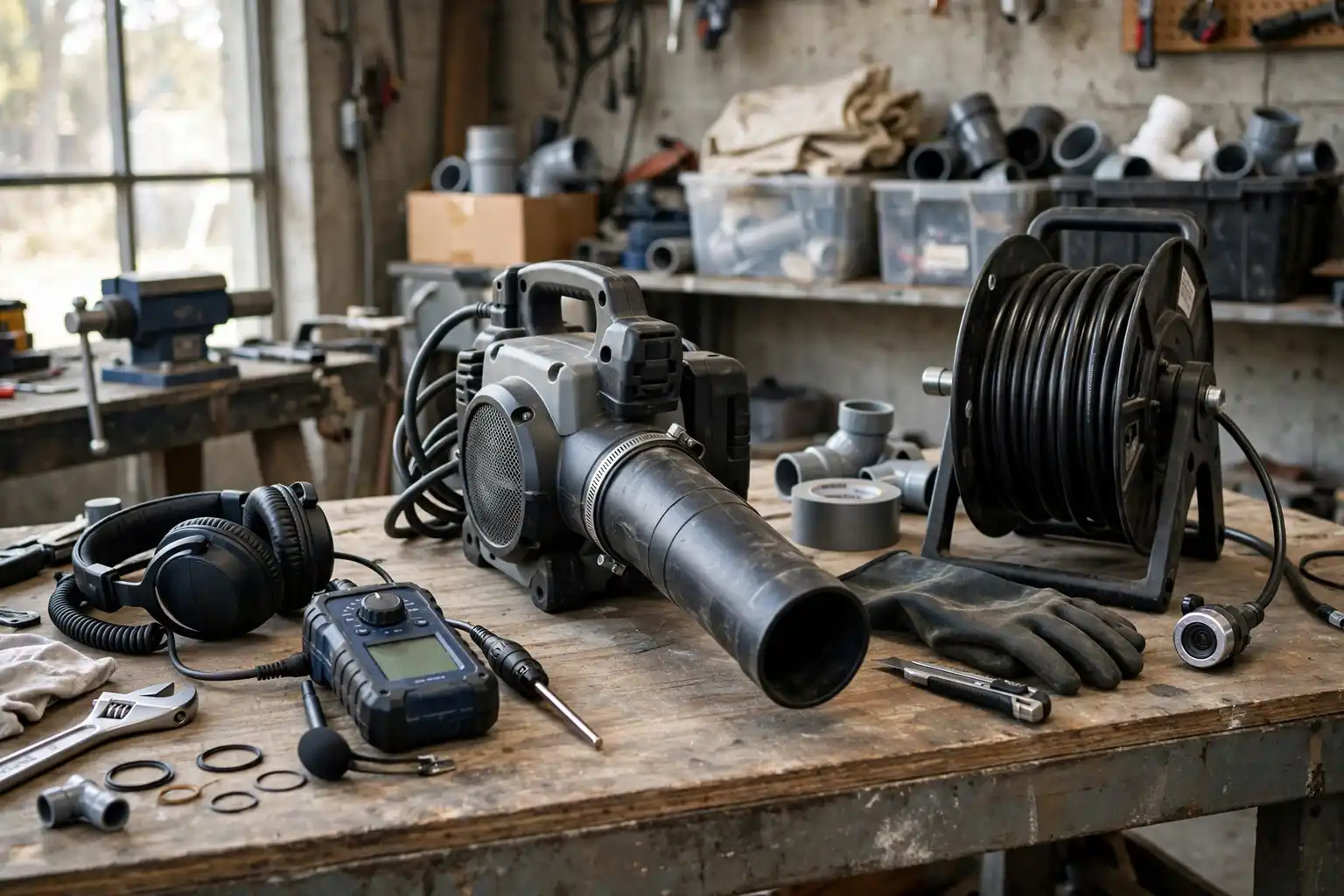
When wastewater is leaking from your sewer line, the hardest part is often finding exactly where. A leak can hide under a slab, beneath a driveway, or deep in the yard, and digging blindly to find it is expensive and destructive. Modern leak detection methods let technicians pinpoint the problem before any excavation begins.
Not every detection method suits every situation. A sewer camera inspection shows you the inside of the pipe, smoke testing reveals where gas escapes, and other techniques each answer a different question. Here is how the main methods compare, so you know what to expect when a technician arrives at your Peabody home.
Why Accurate Detection Comes First
Guessing at a leak location is how small plumbing problems turn into torn-up yards and surprise bills. Accurate detection narrows the repair to the exact spot, which means less digging, less landscape damage, and a repair plan based on evidence rather than hunches. In Massachusetts, where freeze-thaw soil movement and old clay or cast-iron pipes create leaks in unpredictable places, pinpointing matters even more.
Detection also shapes the repair choice. A single cracked joint found on camera might be fixed with a spot repair or pipe lining, while widespread deterioration calls for a different approach entirely. Knowing what you are dealing with is the step that makes every step after it cheaper and simpler.
Camera Inspection: Seeing Inside the Pipe
A push camera or crawler camera is threaded through the sewer line through a cleanout or access point, sending live video to a monitor above ground. The technician can see cracks, root intrusion, separations, bellies where water pools, scale buildup, and collapsed sections. Most camera heads also carry a locator beacon, so the exact position and depth of each defect can be marked on the surface with paint or flags.
This is the workhorse of sewer diagnostics and the right first step in most cases. Its main limitation is that it shows the interior of the pipe, not what is happening in the soil around it. A pipe can look intact on camera while water still escapes through a joint that only leaks under pressure, which is why cameras are sometimes paired with another method.
Smoke Testing: Finding Where Gas Escapes
Smoke testing seals the plumbing system and forces non-toxic, theatrical-style smoke through the pipes. Wherever smoke emerges, sewer gas can escape too. This makes it well suited for finding vent defects, cracked vent stacks, failed toilet seals, and illegal or broken connections that a camera inside the main line would never see.
It is fast, inexpensive relative to excavation, and requires no digging. The trade-off is precision on the underground lateral: smoke shows that a leak exists and roughly where, but it will not give you the exact depth and footage the way a camera with a locator does. For odor complaints and suspected vent problems in older Peabody homes, though, it is often the fastest route to an answer.
Acoustic Listening: Hearing the Leak
Acoustic detection uses sensitive ground microphones or listening rods to pick up the sound of water escaping a pressurized pipe. A trained ear, or increasingly software analysis, can distinguish a leak's hiss from background noise and triangulate its position. It works best on pressurized water lines, but it has applications in sewer systems too, particularly for force mains and for leaks that only flow under certain conditions.
In residential sewer laterals, which run by gravity rather than pressure, acoustic methods are used less often than cameras or smoke. They earn their place when a leak is suspected but the camera shows no clear defect, or when access points for a camera are limited. The main limitation is noise: busy streets, running appliances, and even wind can interfere with readings.
Dye Testing: Tracing the Water's Path
Dye testing is simple in concept: a bright, non-toxic dye is introduced into a fixture or the sewer line, and the technician watches where colored water appears. It is excellent for confirming cross-connections, such as a sump pump or downspout illegally tied into the sanitary sewer, and for tracing which fixture feeds which branch of the system.
It answers a different question than the other methods: not where the pipe is broken, but where the water goes. For Peabody homeowners dealing with mysterious basement moisture after storms, a dye test can prove whether stormwater is entering the sanitary line, which is exactly the kind of evidence needed before deciding on a repair. On its own, though, it will not locate a crack in a buried lateral.
Choosing the Right Method for Your Problem
Match the method to the symptom. Recurring backups or slow drains call for a camera inspection first. A rotten-egg odor with no backup points toward smoke testing. Unexplained wet spots in the yard or a high water bill suggest a leak that cameras and listening equipment can localize together. A good technician will often combine methods rather than relying on one.
When you call Sewer Line Repair Works at (833) 713-2101, the technician starts with your symptoms, the age and material of your pipes, and what access is available, then picks the detection approach that answers your question with the least disruption. Professional sewer leak detection is about choosing the right tool for the job, not running every test on every house.