
When your drains slow down or back up, a plumber will often recommend cleaning the sewer line. But not all cleanings are the same. The two main approaches, mechanical cable cleaning and hydro jetting, work in completely different ways, and choosing the wrong one can mean the clog comes back within months.
For Peabody homeowners dealing with tree roots, grease buildup, or decades of scale in old pipes, understanding the difference matters. Here is a plain-English comparison of sewer line cleaning methods so you can have an informed conversation with your technician.
What Mechanical Cable Cleaning Is
Cable cleaning, often called snaking or rodding, uses a flexible steel cable with a cutting head that spins as it moves through the pipe. The rotating head chews through soft blockages and cuts back tree roots, punching a path through whatever is obstructing flow. It is the traditional approach and still the right call in many situations.
The strength of cable cleaning is its simplicity and its gentleness on fragile pipes. For older clay or cast-iron lines that might not withstand high pressure, a cable with the right head clears the immediate blockage without stressing the pipe walls. Its weakness is thoroughness: a cable punches a hole through the clog but leaves residue coating the pipe interior, which gives the next clog something to grab onto.
What Hydro Jetting Is
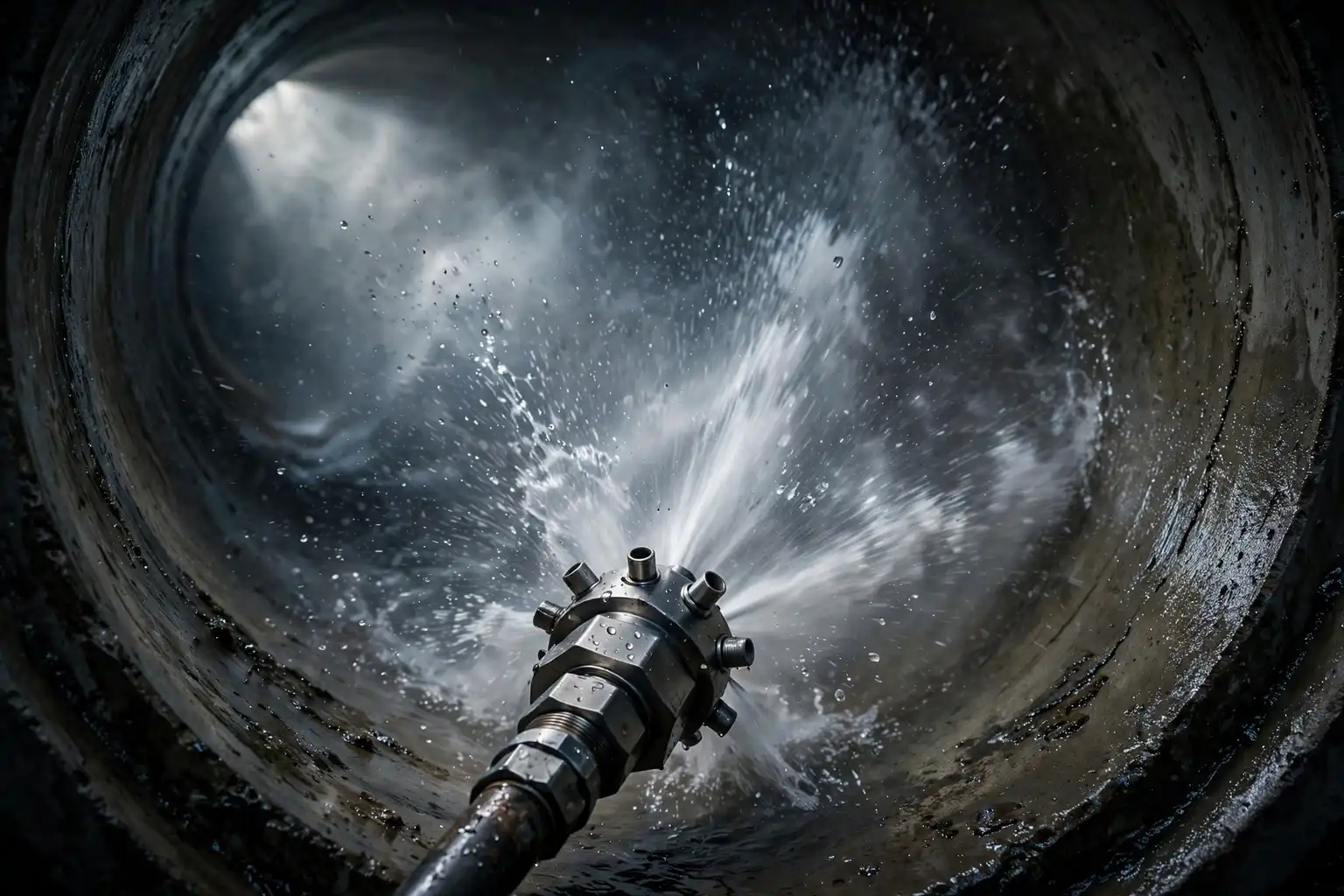
Hydro jetting uses a high-pressure stream of water, delivered through a specialized nozzle, to scour the entire interior circumference of the pipe. Instead of punching through a blockage, it washes it away: grease, sludge, mineral scale, and fine root hairs are blasted off the pipe walls and flushed downstream. The result is a pipe that is close to its original diameter and interior smoothness.
Because it cleans the full pipe wall rather than just the blockage, hydro jetting typically keeps lines clear far longer than cabling. The trade-off is that it requires a pipe structurally sound enough to handle the pressure, which is why a camera inspection usually comes first. It also needs proper access and a place for the jetted debris to go.
Side-by-Side Comparison
Think of it this way: cable cleaning is like poking a hole through a clogged artery, while hydro jetting is like scrubbing the artery walls clean. Cabling is faster to set up, works through smaller access points, and is gentler on deteriorated pipes. Jetting takes more setup, needs a sound pipe, and costs more per visit, but it addresses the buildup that causes repeat clogs rather than just the clog itself.
For a one-time soft blockage, such as a wad of wipes or paper, cabling is usually sufficient. For chronic problems, recurring root intrusion, heavy grease, or scale-narrowed cast iron, jetting is the method that actually resets the pipe's condition. Many technicians use both: a cable to open the line first, then the jetter to finish the cleaning.
When Cable Cleaning Is the Better Choice
Cable cleaning wins when the pipe's condition is unknown or known to be fragile. If a camera inspection shows cracked, offset, or partially collapsed pipe, high-pressure water could make things worse, while a careful cable pass restores flow without added risk. It is also the practical choice for a simple, first-time clog where there is no history of repeat blockages.
Emergency situations favor cabling too. When sewage is backing up into the basement right now, the priority is restoring flow fast, and a cable machine can be in the pipe within minutes. Once the immediate crisis is handled, there is time to camera the line and decide whether jetting or repair should follow.
When Hydro Jetting Wins
Hydro jetting is the answer for buildup problems. Restaurant-style grease accumulation, which is common in homes that do a lot of cooking, coats pipe walls in layers that a cable simply slides through and leaves behind. Mineral scale in old cast iron narrows the pipe over decades; jetting strips it back. Fine root hairs that regrow within months of cabling get sheared off at the wall by the water stream.
If you have needed tree root removal more than once, or your drains slow down again every few months despite cleanings, the residue left by cabling is likely the reason. Jetting resets the pipe interior so the countdown to the next clog starts from a much better place.
What Peabody Homeowners Should Keep in Mind
Peabody's combination of mature trees and aging clay and cast-iron laterals makes root intrusion a frequent reason for repeat cleanings here. Roots exploit tiny joint separations, and once inside they thrive on the nutrients in wastewater. Cabling cuts them back; jetting washes out the fine mass more completely. Either way, roots grow back, so a line with heavy intrusion eventually needs repair or lining rather than endless cleanings.
The smart sequence is: camera first, then clean with the right method, then camera again to verify. That post-cleaning inspection shows whether the pipe is sound or whether the real problem is structural. If your drains keep slowing down, call Sewer Line Repair Works at (833) 713-2101 for a sewer line cleaning plan based on what is actually in your pipes.