
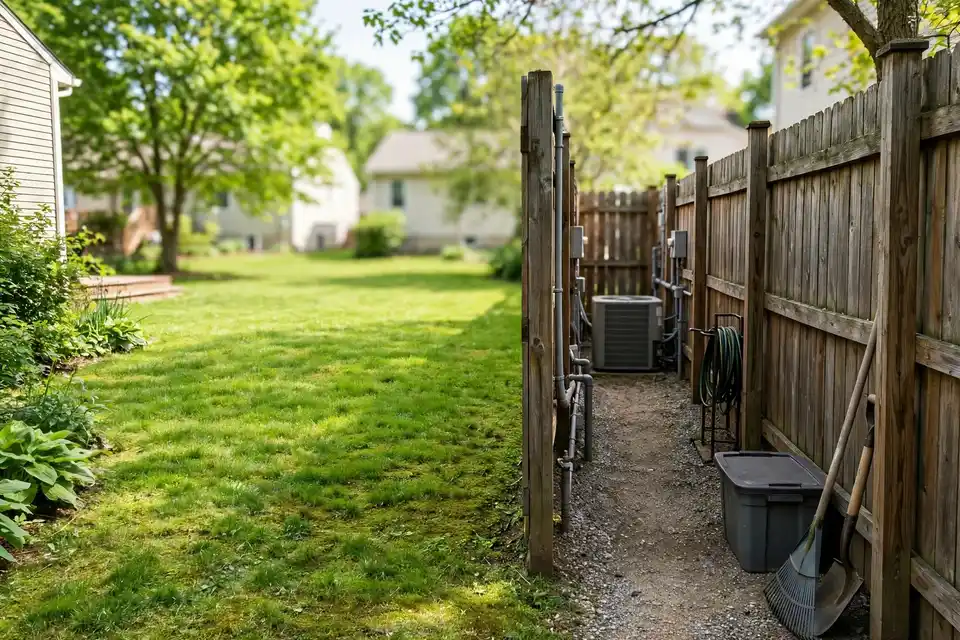
If a sewer line crosses your yard to serve neighboring homes, there is a good chance a legal easement gives the city or utility the right to access it. Many Peabody homeowners discover this only when a repair crew shows up, or when a planned project runs into a strip of land they cannot build on.
Easements sound intimidating, but the concept is straightforward: someone else holds a limited right to use part of your property for a specific purpose. Here is what sewer easements mean for Massachusetts homeowners, what you can and cannot do, and how they interact with sewer repairs.
What a Sewer Easement Actually Is
An easement is a legal right to use another person's land for a limited purpose. A sewer easement typically allows a municipality or utility to install, access, maintain, and repair a sewer line that runs across your property. You still own the land, but the easement holder has the right to enter that strip to work on the pipe.
Easements are usually recorded with the property deed, which means they transfer with the property when it is sold. They can be surprisingly old: in Peabody neighborhoods developed in the early to mid-1900s, easements were often granted when the sewer system was first extended, and the paperwork has been riding along with the deed ever since.
How to Find Out If You Have One
Start with your deed and title documents from when you purchased the home. Easements are typically described there with a width and a purpose, such as a ten-foot-wide sanitary sewer easement along the rear lot line. Your local registry of deeds also holds these records, and many Massachusetts registries now offer online document search.
If the paperwork is unclear, a plot plan or survey of your property will usually show easement boundaries as dashed lines or shaded strips. Title companies can also pull this information. It is worth checking before you plan any significant yard project, since building over an easement can create expensive problems later.
Your Rights and Responsibilities
As the property owner, you can generally use the easement area for anything that does not interfere with access to the sewer line: lawn, gardens, and walkways are usually fine. What you cannot do is block access or build permanent structures over it. Sheds, additions, pools, and deep-rooted plantings in the easement strip can all become problems if the line needs work.
Your responsibility is to keep the area reasonably accessible. The easement holder's responsibility is to restore the area after their work as required by the easement terms or local practice. In practice, restoration quality varies, which is why documenting the condition of the area with photos before any utility work begins is a smart habit.
Easements and Sewer Repairs
Here is where easements get practical. If the sewer line inside an easement fails, the municipality or utility typically handles the main line, while the lateral connecting your home to that main is usually your responsibility, easement or not. Knowing exactly where your responsibility ends and theirs begins saves arguments and duplicate work when a problem appears.
When your own lateral needs sewer line installation or repair and it crosses a neighbor's easement area, or when work must happen inside an easement on your property, coordination matters. Trenchless methods like trenchless sewer repair are often ideal in easement situations because they require only small access points rather than an open trench across the restricted strip.
Resolving Easement Conflicts
Conflicts usually arise from three situations: a homeowner builds over an easement without knowing, a utility's restoration after repair work is unsatisfactory, or there is disagreement about who maintains what. The first step in all three is the same: pull the recorded easement language and read exactly what it grants, because the specific wording controls.
For planned projects near an easement, a quick call to the municipal engineering or public works department before you build can prevent most problems. If a dispute is already underway, a real estate attorney familiar with Massachusetts property law can interpret the easement and advise on your options. Most conflicts resolve once both sides are looking at the same recorded document. For questions about how easement access affects a planned sewer project on your property, Sewer Line Repair Works at (833) 713-2101 can help you understand the practical side of the work involved.