
Installing a new sewer line is one of the bigger plumbing projects a homeowner can face, whether it is a brand-new lateral for an addition, a replacement for a failed line, or a connection for new construction. Knowing the steps in advance turns an intimidating project into a manageable one.
This walkthrough covers how professional sewer line installation works in Peabody, from the first site visit to the final inspection, including the trenchless alternatives that can skip most of the digging.
Planning, Permits, and Locating Utilities
Every installation starts on paper. The contractor evaluates the site, determines the best route from the building to the municipal main or septic connection, and calculates the slope the pipe needs to drain by gravity. In Massachusetts, sewer work requires a permit from the local board of health or public works department, and the plan must meet state plumbing code requirements for depth, material, and slope.
Before any digging, underground utilities are marked through the Dig Safe process. Gas, electric, water, and communications lines share the ground with your future sewer line, and striking one is dangerous and expensive. A camera inspection of any existing pipe and a check of property-line cleanout locations round out the planning phase.
Site Preparation and Access
On installation day, the crew protects the work area: landscaping that can be saved is moved, driveway or walkway sections that must be cut are marked, and equipment is staged. If the route crosses a neighbor's property or an easement, those permissions are confirmed in advance so work does not stall mid-project.
For traditional open-trench installation, the trench path is marked along the planned route. For trenchless methods like pipe bursting, the crew instead prepares small entry and exit pits. Either way, this is also when the crew confirms the connection point at the municipal main and verifies depths so the new pipe will meet the existing system at exactly the right elevation.
Excavation
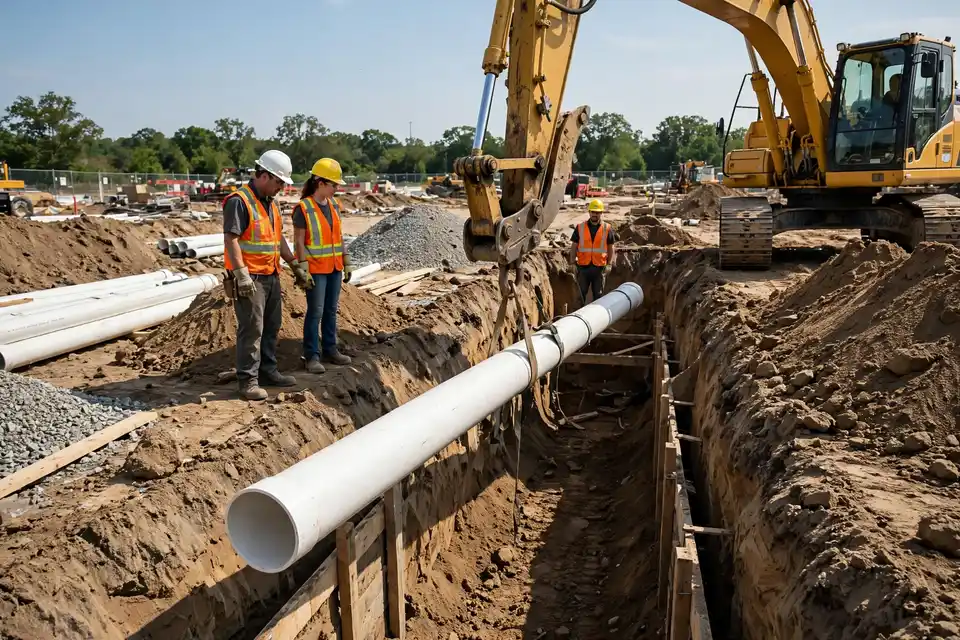
In a traditional installation, an excavator opens a trench along the marked route, typically several feet deep to get below the frost line and maintain proper slope. Massachusetts winters make depth non-negotiable: pipe buried too shallow can freeze or shift with frost heave. Soil conditions matter here too. Rocky New England soil or a high water table can slow excavation and require shoring to keep the trench walls safe.
Trenchless installation skips almost all of this. With pipe bursting, only the launch and reception pits are dug; a bursting head then travels through the old pipe's path, fracturing it outward while pulling the new pipe in behind it. The surface disruption drops from a full trench to two modest holes.
Laying the New Pipe
New sewer pipe, most commonly PVC or HDPE in modern installations, is laid in sections or pulled in as a continuous run, depending on the method. Each joint is sealed, and the crew checks slope continuously with a level or laser: too flat and solids settle, too steep and water outruns the solids, leaving them behind. Getting the grade right is one of the most important craftsmanship elements of the job.
Bedding material, usually crushed stone or sand, is placed under and around the pipe to support it evenly and protect it from sharp rocks. In areas with unstable soil, the bedding layer is even more critical, since uneven support is what causes bellies and joint separations years later.
Connections, Testing, and Inspection
The new line is connected to the building's plumbing at one end and to the municipal main or existing system at the other, often with a new cleanout installed near the property line for future access. Before anything is buried, the line is tested: typically with water or air pressure tests, and frequently with a camera run to verify that joints are sound and the slope is consistent.
Then comes the municipal inspection. The inspector verifies depth, material, slope, and connections against the permitted plan before authorizing backfill. This step protects you: it is an independent check that the installation meets code, and skipping it can create major problems when you sell the home.
Backfill, Compaction, and Restoration
Once the installation passes inspection, the trench is backfilled in layers, with each layer compacted to prevent future settling. Proper compaction is what keeps your yard from developing a sunken trench line a year later. Topsoil is replaced, seed or sod goes down, and any cut driveway or walkway sections are repaired.
A reputable contractor walks the site with you at the end, confirming restoration and explaining the new cleanout locations and any maintenance the new line needs, which is usually very little. If you are planning a sewer line installation in Peabody, calling Sewer Line Repair Works at (833) 713-2101 gets the process started with a site evaluation and a clear explanation of trenchless versus traditional options for your property.