
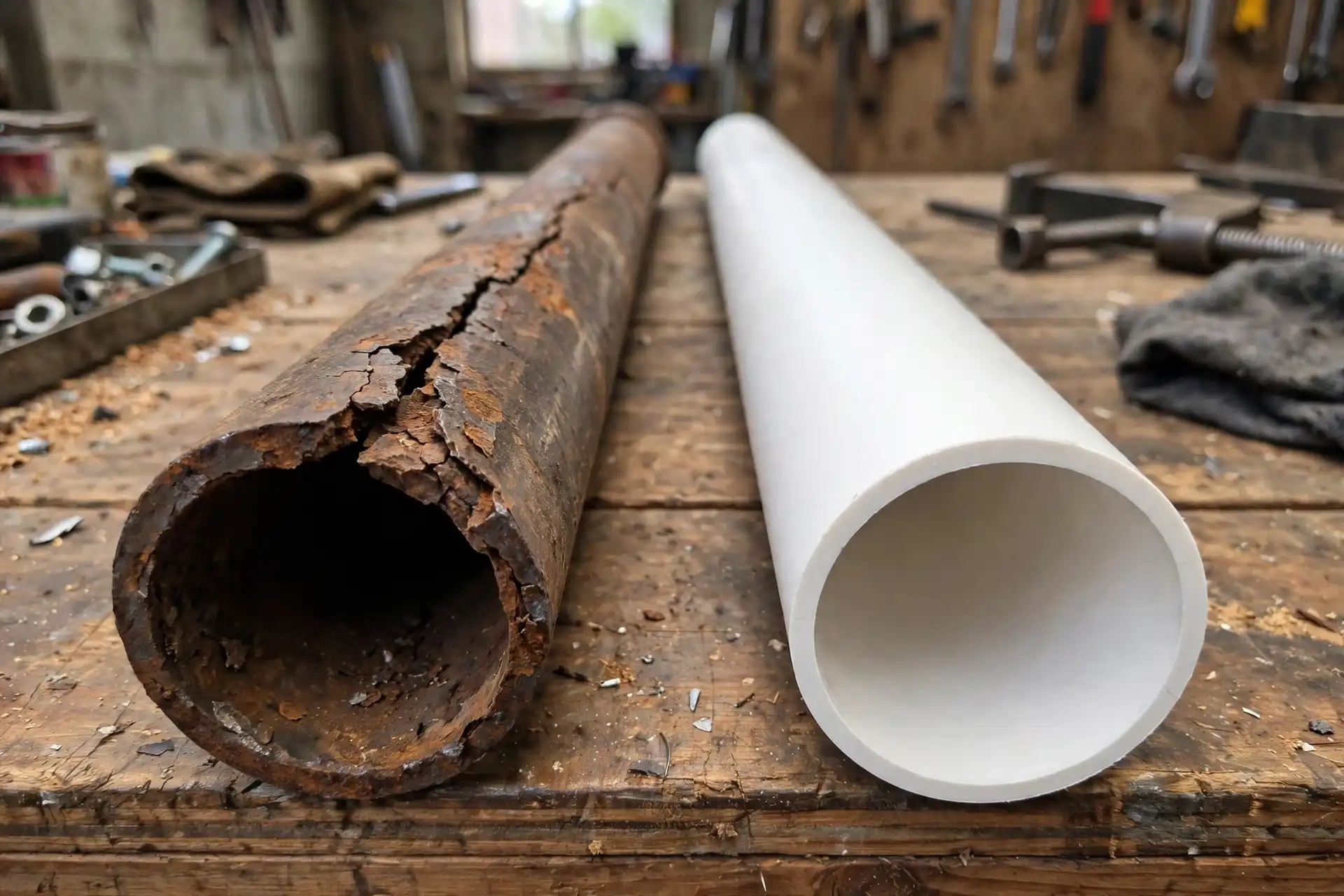
When a camera inspection reveals a damaged sewer line, the next question is rarely simple: should you repair the damaged section or replace the line? Both paths solve the immediate problem, but they differ in scope, disruption, longevity, and total investment. Choosing well means matching the solution to the actual condition of your pipe.
There is no universal right answer, only the right answer for your pipe. This guide lays out how professionals think through the decision, so Peabody homeowners can weigh repair against sewer line replacement with clear eyes.
When a Targeted Repair Makes Sense
Repair is the right call when the damage is localized and the rest of the pipe is sound. A single cracked section, one separated joint, or an isolated root intrusion in an otherwise healthy line are classic repair candidates. A camera inspection that shows good pipe on both sides of the defect is the green light for a targeted fix.
Repair also makes sense when the pipe material still has life in it. A twenty-year-old PVC line with one bad joint is a very different asset than a sixty-year-old clay line with one visible crack and who knows what elsewhere. If the line is relatively young and the problem is truly isolated, repairing the spot addresses the issue without paying for work the pipe does not need.
When Replacement Is the Smarter Move
Replacement earns its place when problems are systemic rather than isolated. Multiple cracks, widespread root intrusion at many joints, extensive scale, bellies in several sections, or a pipe whose material has reached the end of its service life all point toward starting fresh. Fixing one section of a line that is failing everywhere is how homeowners end up paying for the same project twice.
Recurring history is another signal. If you have repaired or cleared the same line several times and problems keep returning, each intervention has been treating symptoms of a pipe that needs to go. Replacement, whether by traditional excavation or trenchless pipe bursting, resets the clock with a new pipe engineered for decades of service.
Pipe Age and Material Tell Much of the Story
The pipe's birth certificate matters. Clay tile lines, common in Peabody homes built before the 1970s, are vulnerable at every joint and typically the source of chronic root problems. Cast iron corrodes from the inside, narrowing and weakening over decades. Orangeburg, a tar-paper pipe used mid-century, deforms and collapses with age. When the material itself is the problem, repairs buy time rather than solving anything.
Modern PVC and HDPE, by contrast, resist roots and corrosion and join with far fewer vulnerable points. If your line is already modern material with an isolated defect, repair is usually the economical and sensible choice. A technician can identify your pipe material on camera and explain what its typical remaining life looks like.
The Extent of Damage Decides
Think in percentages. If ten percent of the line is damaged and ninety percent is sound, repair the ten percent. If half the line shows defects, the economics flip: mobilizing for a repair that covers half the pipe often approaches the investment of replacing all of it, without the benefit of a fully new system.
This is where trenchless options change the math. Pipe lining can rehabilitate long runs of deteriorated pipe from the inside, offering a middle path between spot repair and full replacement. Lining works when the pipe still holds its shape; collapsed or severely misaligned sections need excavation or bursting instead. The camera footage, not guesswork, determines which category your pipe falls into.
Root Intrusion: Repair Symptom or Replace Cause
Roots are the great decider in Peabody, where mature trees and old clay joints are a perfect combination. Light intrusion at one or two joints can be managed with cleaning and a targeted repair that seals the entry points. Heavy intrusion at many joints means the pipe is essentially a root farm, and every cleaning is just a haircut.
Ask the technician to show you the extent on the camera monitor. If roots appear at joint after joint along the run, replacement or full-length lining addresses the cause. If they are confined to one area, a repair that eliminates those entry points can give the rest of the line a clean future.
A Simple Decision Checklist
Walk through these questions with your camera footage in hand. Is the damage confined to one area or spread along the line? Is the pipe material modern or past its prime? Have you repaired or cleared this line before, and did the fix last? Is the rest of the pipe sound enough to justify investing only in the bad section? Honest answers usually point clearly in one direction.
Then get the options priced as complete projects, including restoration, so you compare real totals. Sometimes the difference between a large repair and a replacement is smaller than expected, and the new pipe's longer service life settles the question. For an honest assessment of which path fits your line, call Sewer Line Repair Works at (833) 713-2101 for a camera-based evaluation and a plain-English explanation of your options.